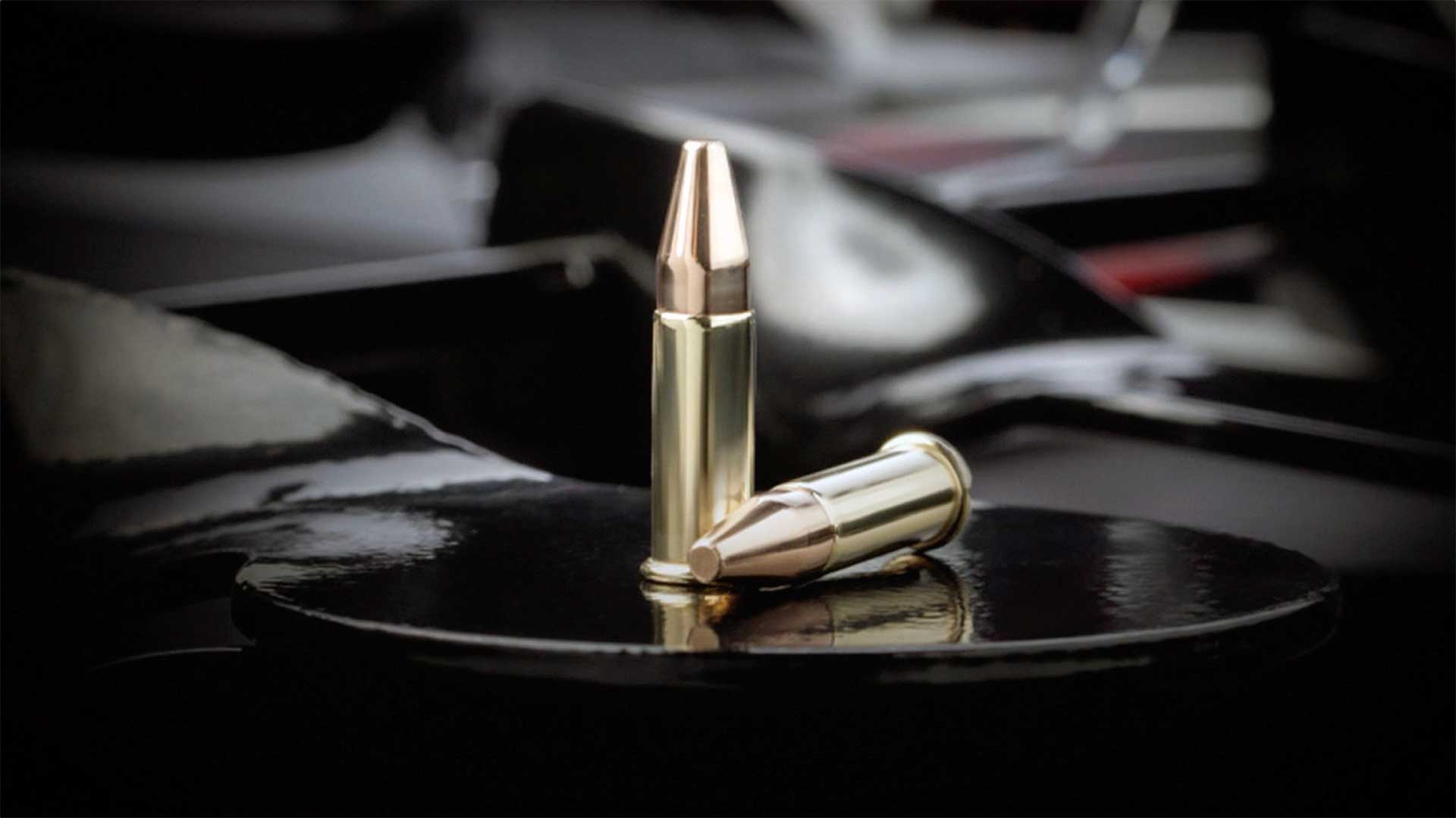
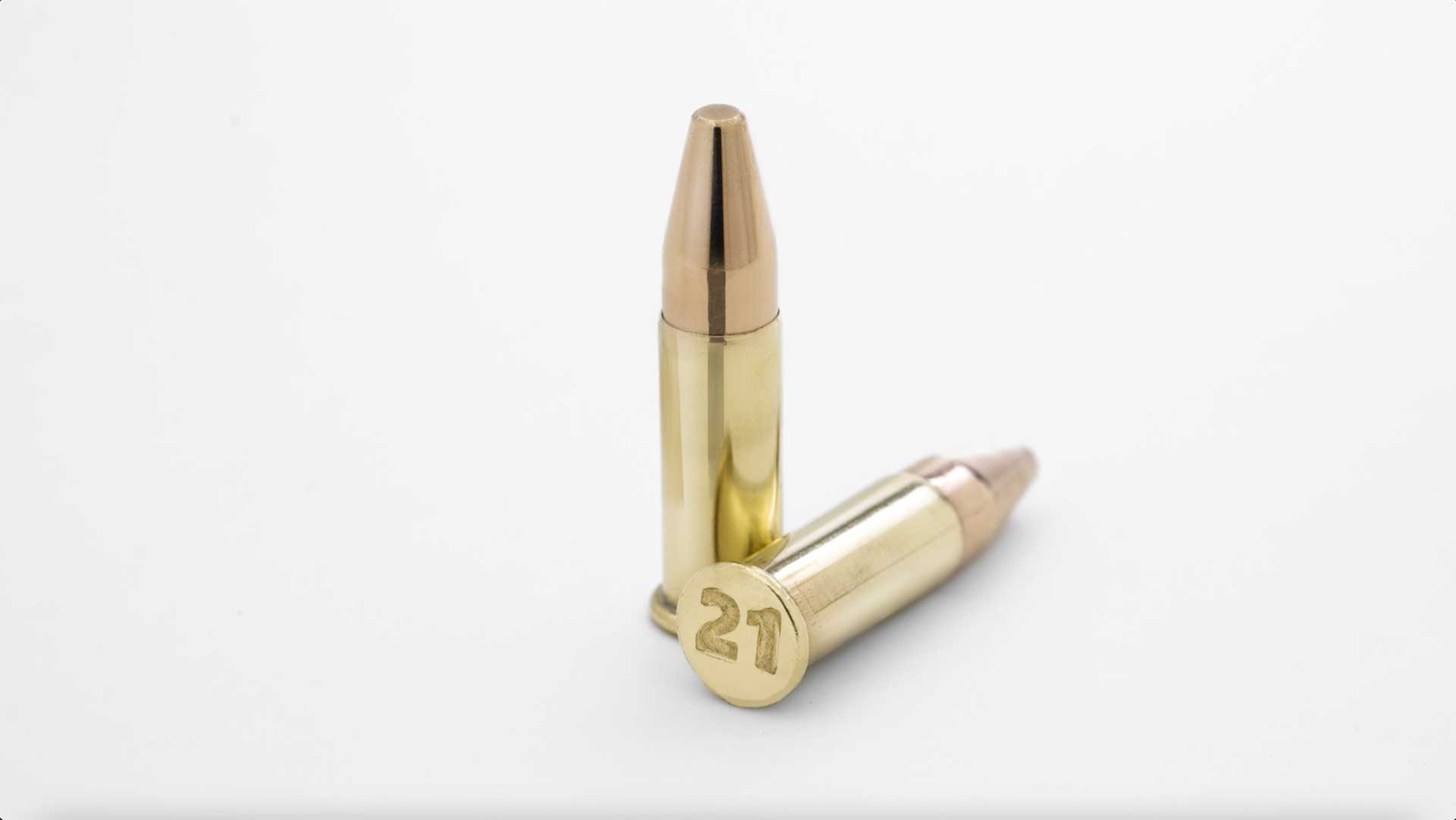
It can feel like new centerfire cartridges are a dime a dozen, with one or two seemingly coming along each and every year. But new rimfire chamberings? Not so much, which makes it a noteworthy occasion any time an ammunition manufacturer brings a new rimfire cartridge to market. Well, Winchester Ammunition did just that this week with the introduction of the .21 Sharp, an evolution of the .22 Long Rifle that promises higher velocities and far superior bullet selection.
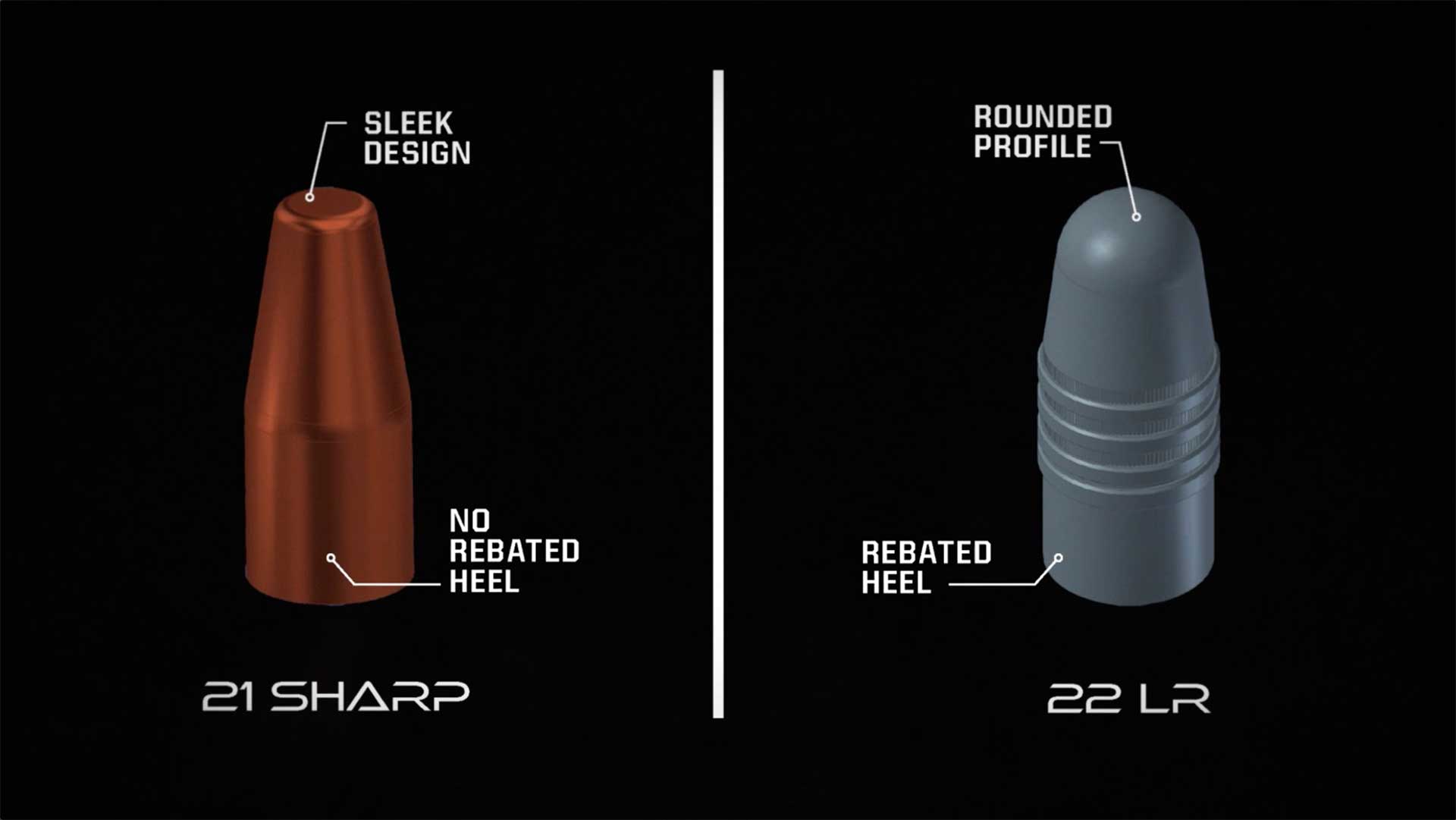
The .22 Long Rifle occupies a sweet spot in regards to cost, power, recoil, availability and utility, but it’s far from perfect from an engineering standpoint, and the .21 Sharp was designed around rectifying the .22 LR’s main inherent design flaw. The glaring issue with the .22 is that the bearing surface of its projectile and the exterior diameter of its case are identical, meaning that the rear of the bullets must be necked-down (or heeled) to a smaller diameter in order to seat properly in their case—hugely limiting their exterior ballistics while reducing case capacity.
Winchester has designed .21 Sharp to utilize the exact same 0.613”-long, 0.226”-diameter case as the .22 Long Rifle—while operating at an identical 24,000-p.s.i. Maximum Average Pressure—but firing smaller .21-cal. bullets. This allowed the company to develop a variety of non-heeled .21 Sharp projectiles made using modern bullet-designing techniques like jacketed hollow points, spitzer points, lead-free monolithic construction and more aerodynamic boattails. The use of standard .22 LR cases is also a manufacturing expedient, which will allow Winchester to keep its .21 Sharp production costs down—and should hopefully help keep consumers’ prices down as well.
At launch, four loads are being offered, with bullets ranging from 25 to 42 grains in weight and advertised velocities between 1,300 and 1,750 f.p.s.—slightly faster and slightly more energetic than comparable .22 Long Rifle loads. They include a 34-grain Super X JHP and three additions to the Game & Target line: a 42-grain FMJ; a 25-grain lead-free Copper Matrix; and a 37-grain Black Copper Plated.
“The .21 Sharp cartridge offers significant advantages in the rimfire category, which is one of the more popular types of firearms and ammunition used by millions of people throughout the world,” said Kyle Masinelli, senior director of product innovation and strategy for Winchester Ammunition. “Winchester leadership in cartridge development spans more than 100 years, and, as the global leader in ammunition design and manufacturing, it’s our job to serve our customers with innovative products that fit their needs now and into the future. That is what has been done with .21 Sharp.”
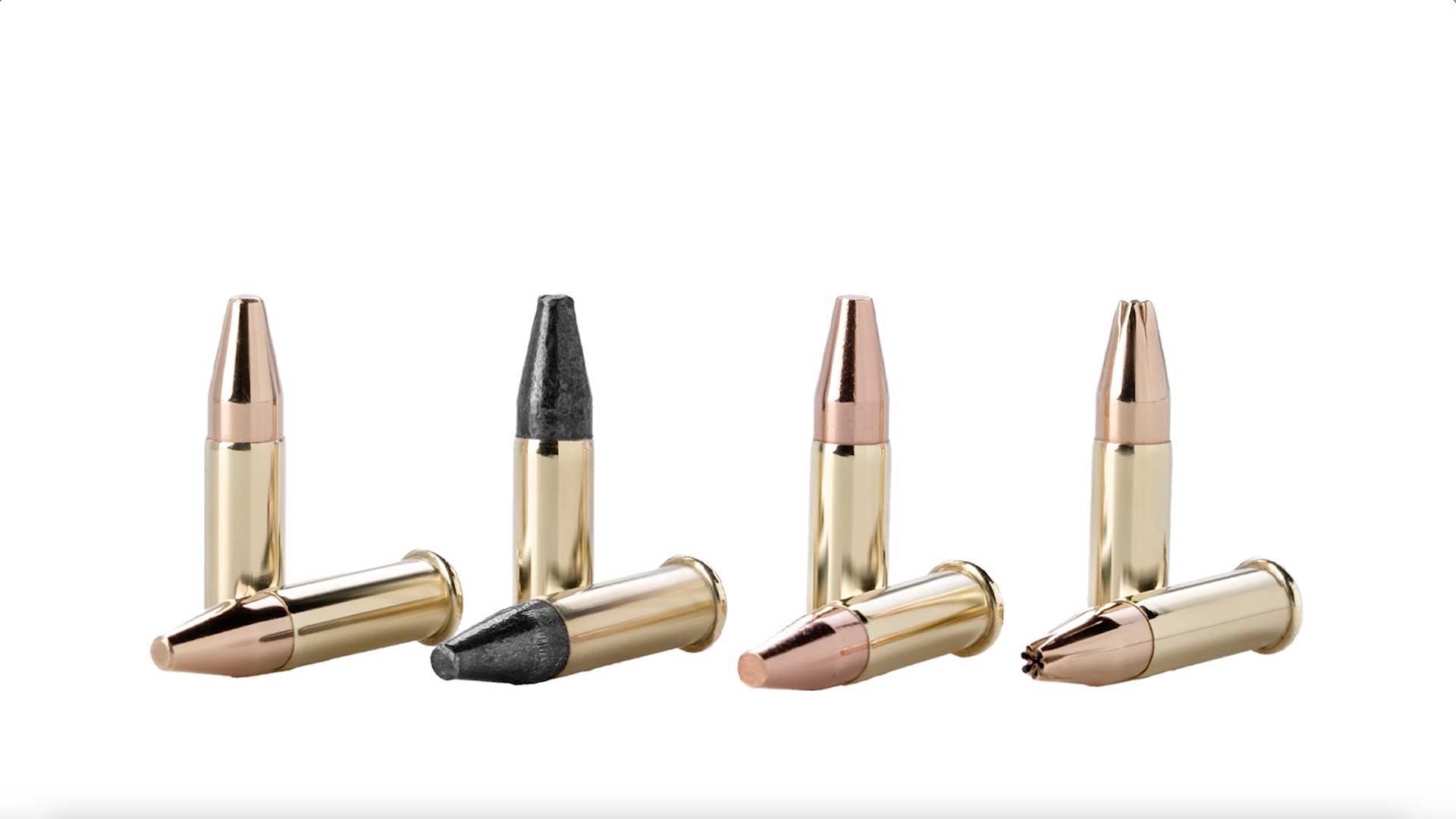
From left to right: 42-grain FMJ; 37-grain Black Copper Plated; 25-grain lead-free Copper Matrix; and 34-grain Super X JHP.
While the .21 Sharp will chamber in a .22 LR rifle barrel, due to its sub-caliber projectile, it cannot be fired with any degree of accuracy or precision. Additionally, .22 LR cartridges will not fit into a .21 Sharp chamber due to its heeled projectile. All that should be necessary for most .22 Long Rifle-chambered firearms to shoot the new cartridge is a .21 Sharp barrel. For more information on Winchester’s new .21 Sharp, visit winchester.com.
Most Popular