Carl Walther established gunmaking legend Carl Walther GmbH Sportwaffen—better known today as simply Walther—in 1886. The small factory was located in Zella-Mehlis, Germany, and specialized in producing target and hunting rifles.
Two years later, he married and became the son-in-law of man whose firm made revolvers. The union laid the foundation for Walther’s entry into the handgun market, although that wouldn’t take place until 1908, when Fritz, Walther’s oldest son, launched the effort. The company’s introduction of blowback-operated semi-autos chambered in .25 ACP, .32 ACP and 9 mm Luger received a lukewarm reception, though.
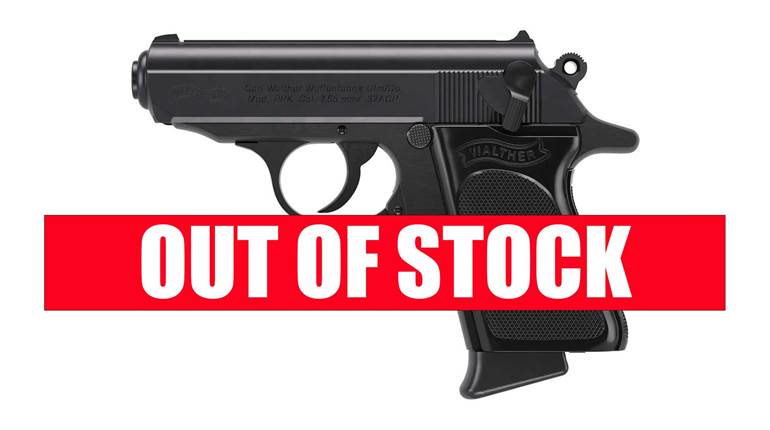
The first big success came in 1929 when Walther introduced its famed Polizeipistole, referred to more fondly as the PP. Two years later, a police detective version rolled out of the factory, the PPK (Polizeipistole Kriminalmodell) now permanently cemented in the minds of moviegoers, thanks to the James Bond Franchise.
In 1938, Germany adopted the Walther P38 to replace the Lugers it issued to the military, although the fortunes of war never saw complete retirement of the more expensive-to-make predecessor. During World War II, the company’s factory was destroyed and came under Soviet control.
Walther rose from the ashes and escaped the communist regime by establishing a new factory in 1953. This one was located in Ulm, West Germany, where P38 production resumed to arm the country’s military.
Umarex Sportwaffen acquired Walther in 1993, and both are now part of the PW Group, a Germany-based corporation. In 1999, Walther signed an agreement with Smith & Wesson, granting exclusive rights to import its firearms into the United States.
That came to an end in 2012 when American-based Walther Arms was officially established to handle stateside distribution. The company’s headquarters and factory are located in Fort Smith, Ark. A large part of production in Europe has methodically been moved to the U.S. facility and American-made PPKs and PPK/Ss are now made in the Natural State.
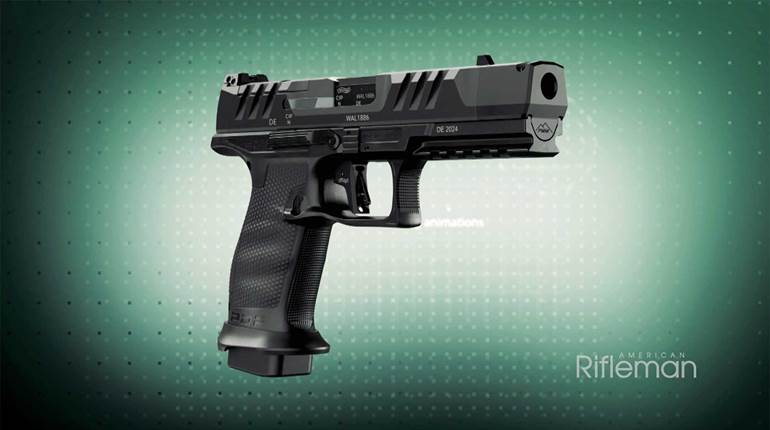
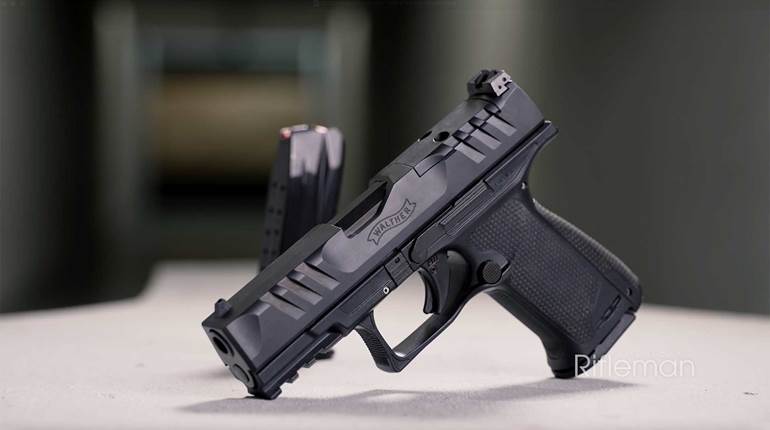
The company has a rich history, but part of that legacy is a habit of never resting on laurels. Improvement is always in the works. For example, in 2021, it introduced the Walther CCP M2 in 9 mm Luger, a version of its popular single-stack with gas operation that has been altered to ease field stripping, among other things. Its Performance Duty Pistol (PDP) was also new for 2021, but the company actively listens to feedback and requests, and the following year, the PDP line received more offerings.
Most Popular