Tips & Techniques: Removing Rust Without Damaging Bluing

by
posted on September 21, 2024
** When you buy products through the links on our site, we may earn a commission that supports NRA's mission to protect, preserve and defend the Second Amendment. **
Removing Rust Without Damaging Bluing

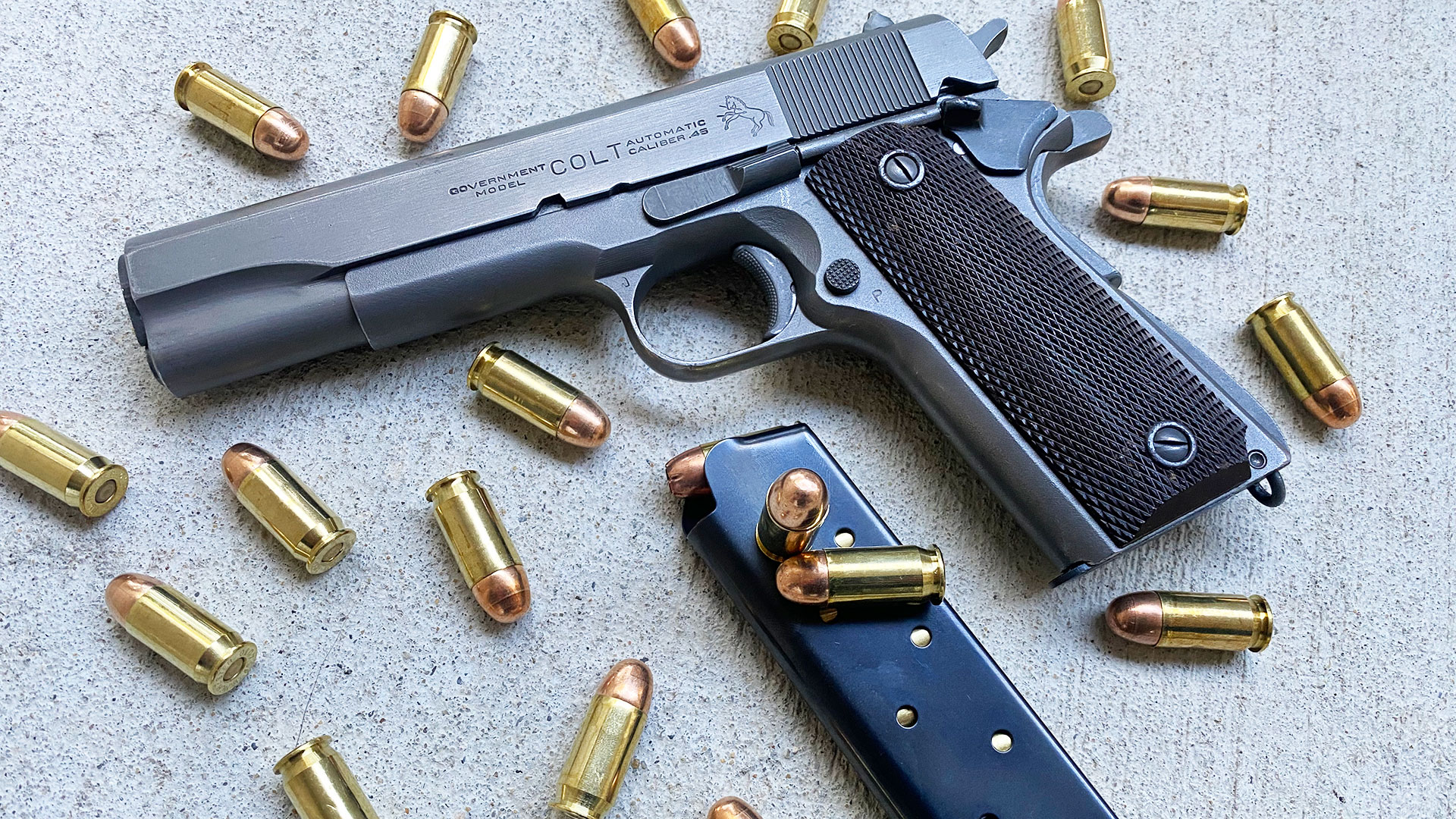
As a dealer and gunsmith who specializes in antique firearms, I am often asked questions about restoration techniques. One of the most common is: “How do I remove rust from my gun without disturbing its original bluing?” The answer is simpler than you might think.

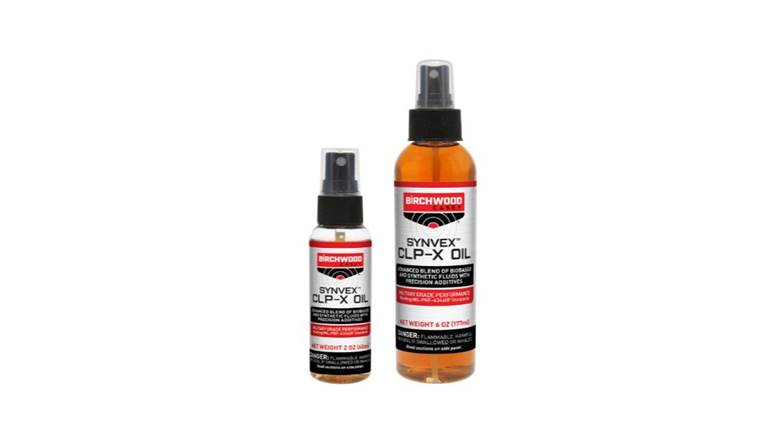
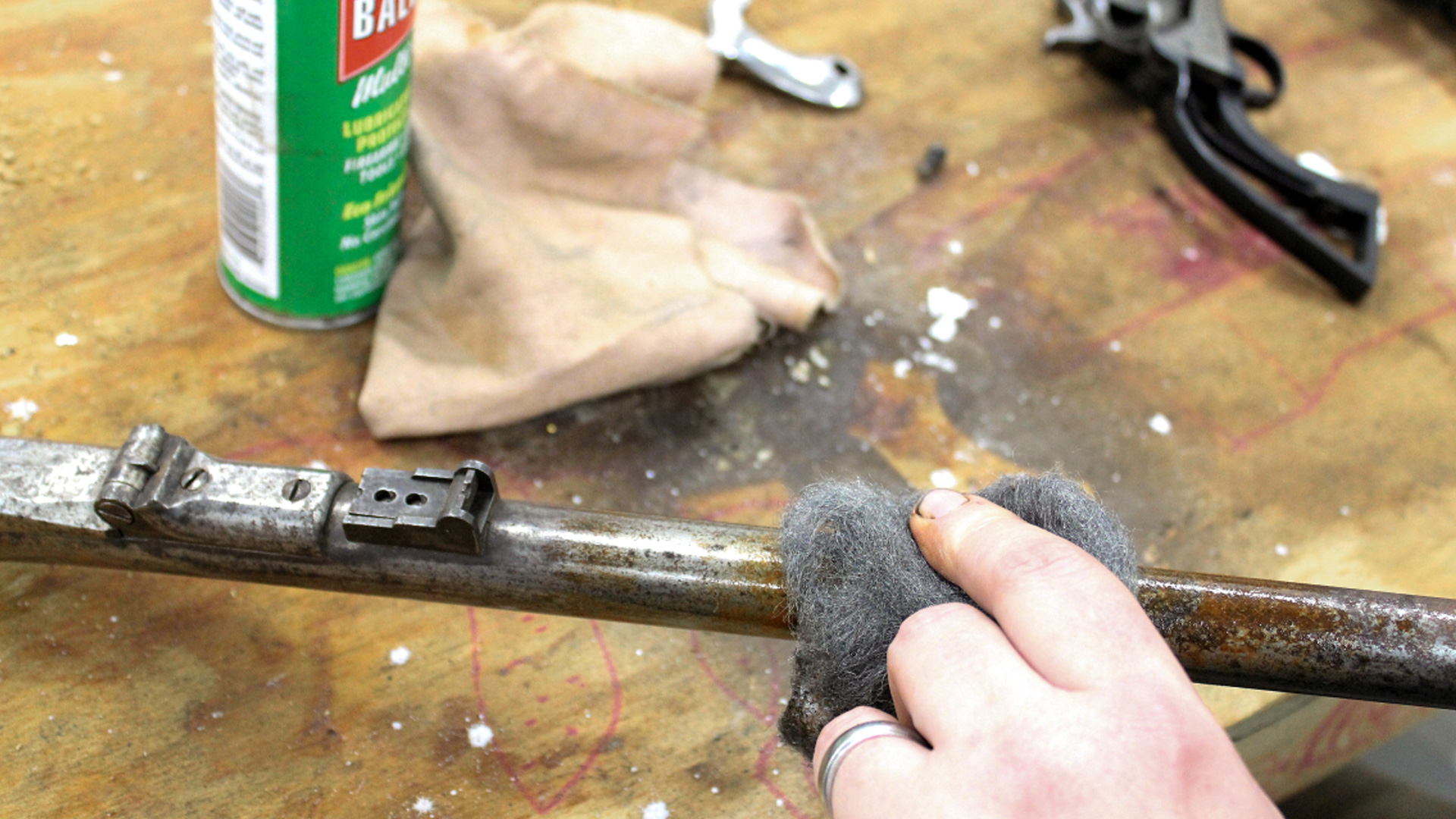
First, fieldstrip the firearm, removing the stock if possible. Next, take a trip to your local hardware store and grab a pad of 0000 fine steel wool. Then, take your favorite gun oil and apply it liberally to the steel wool. Sit down in front of the TV and begin scrubbing the rusted areas of your gun with the oiled steel wool pad. The steel wool is coarse enough to remove most rust that’s formed on the external surfaces of your gun without being aggressive enough to attack the finishes that are already bonded to the steel.

The trick here is to keep plenty of oil on the steel wool, as it will prevent the pad from “biting” into the gun’s factory bluing. Keep a rag handy to occasionally wipe off the rusty oil slurry that will inevitably develop during the process. Take care not to scrub over any painted or color-casehardened surfaces; these finishes are extremely delicate and can easily be removed with steel wool. Continue scrubbing until the rust has been removed (Note that steel wool may not remove all the rust from a firearm, especially if the rust has pitted the steel underneath).

This technique can also be used to remove rust from an antique patina finish—the “used, but well-cared-for” look that develops on old military muskets. Since a natural patina takes many years to develop, this warm, plum-colored finish will remain bonded to the steel while more modern red rust can easily be scrubbed off with the steel wool.

—David Stavlo, Lodgewood Mfg.

Latest

Shooting For 1000 1
Shooting For 1000 1

Reaching for 1,000: A Study in Long Range Marksmanship

Calculating all the factors that go into a well-placed shot at distance can be a daunting task for those new to long-distance marksmanship, but when it all comes together, the result is gratifying.

ATF Proposes Changes to Form 4473

The ATF proposed a series of changes to form 4473 in May. If approved, the modifications would shave three pages from the paperwork and eliminate a lot of the previous form’s confusing redundancy­, trimming questions for both the purchaser/transferee and FFL.

Roar of the Muskets: The North-South Skirmish Association

The North-South Skirmish Association keeps Civil War history alive through competition shoots using Civil War-era arms at its Fort Shenandoah home base, as well as at regional shoots across the country.

Interest in Gunsmithing Grows as Potential AI Safe Haven

We’re told AI could eventually eliminate every job, and the trades will just be the last to go. But a pair of experts dedicated to training gunsmiths have a different opinion on the fate of their graduates.

Pietta Re-Introduces Starr Revolver Models

Late last year, Pietta announced it would be re-introducing their Starr revolver in both its double-action and single-action form, and now, the guns are finally arriving stateside.

Why the Murder Rate Quickly Fell to a Likely Historic Low

If the gun-control Left is to be believed, then the murder rate in the U.S. should be going up. After all, gun sales and ownership rates have been rising for the last few decades and anti-gun groups claim that gun ownership is the cause of violent crime. This, of course, is nonsense.

Interests


Get the best of American Rifleman delivered to your inbox.