While gun ownership laws in the United Kingdom are very troubling to NRA members, oddly enough the Brits are way ahead of us when it comes to using suppressors, or as they call them, moderators. While Americans must apply for a federal permit to own a suppressor-and then several months for processing-UK shooters simply purchase theirs and then have it noted on the license for the gun on which it will be mounted. While it’s a blessing that America has mostly rejected firearm licensing (and believe me, the UK system is truly alarming), the same common sense is lacking when it comes to a truly useful device that does nothing more than lower a gun’s report and in some cases can make its ballistic performance a bit more consistent.
Mindful of the current unprecedented interest in suppressors among NRA members, Steve Hornady and I have come to England to observe firsthand use by shooters and hunters who, despite daunting political opposition, remain vital parts of the national fabric. (In fact the numbers of both are reportedly increasing.)
Our first stop is the annual CLA Game Fair, a vast open-air affair organized by the Country Landowners Association, as a showcase for conservation, shooting, hunting, fishing, dog training and farming interests (among others). Steve has been busy greeting attendees at the Edgar Brothers stand, the UK’s largest importer of shooting gear, including Hornady ammo and reloading products. At Edgar’s and throughout the fair’s Gunmaker’s Row, the muzzles of almost every new rifle are threaded (“screw-cut”) to accept suppressors. Edgar’s Jon Workman explained to me that 100 percent of the rimfires and 98 percent of center-fire rifles the company handles are screw-cut.
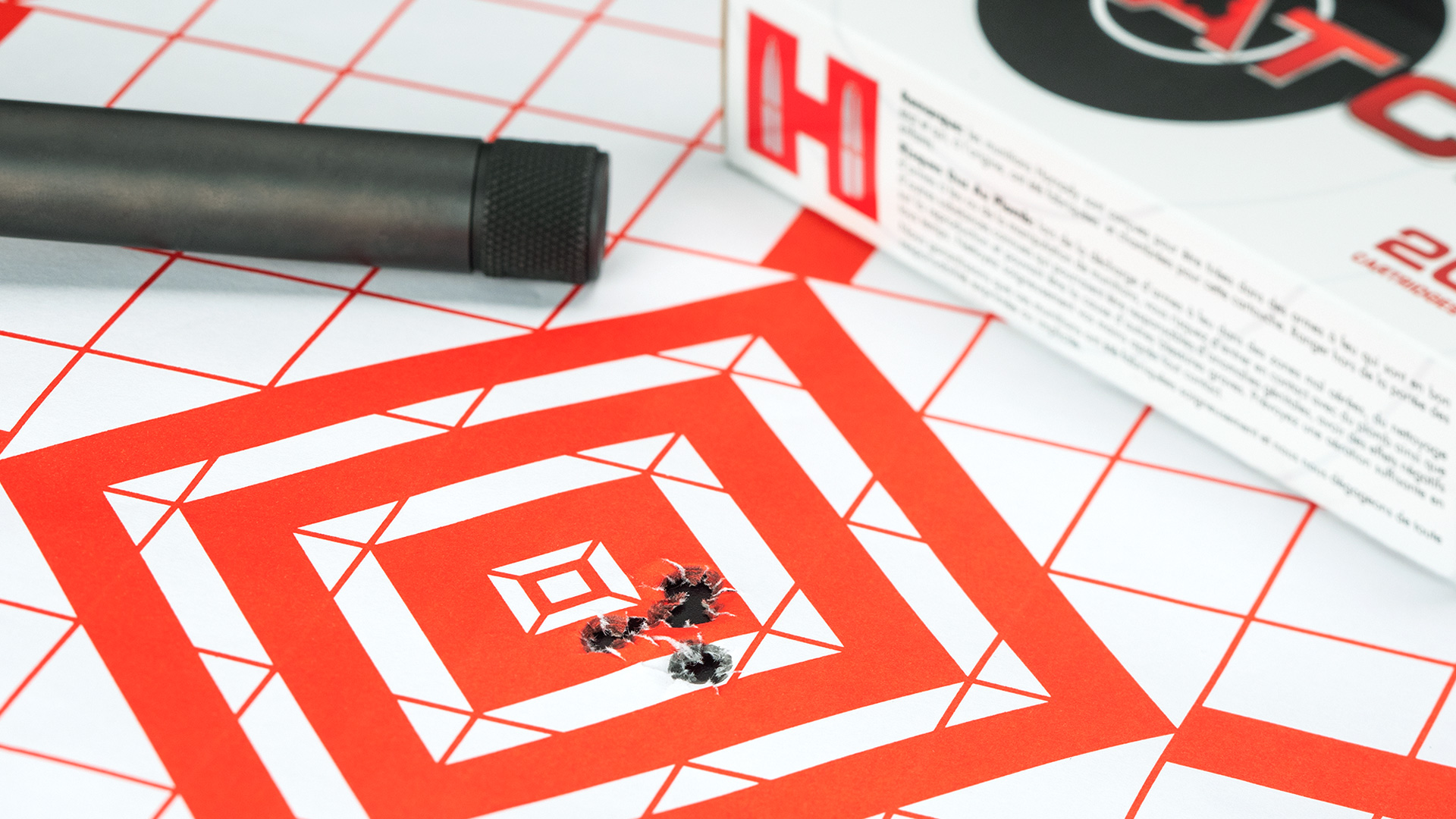
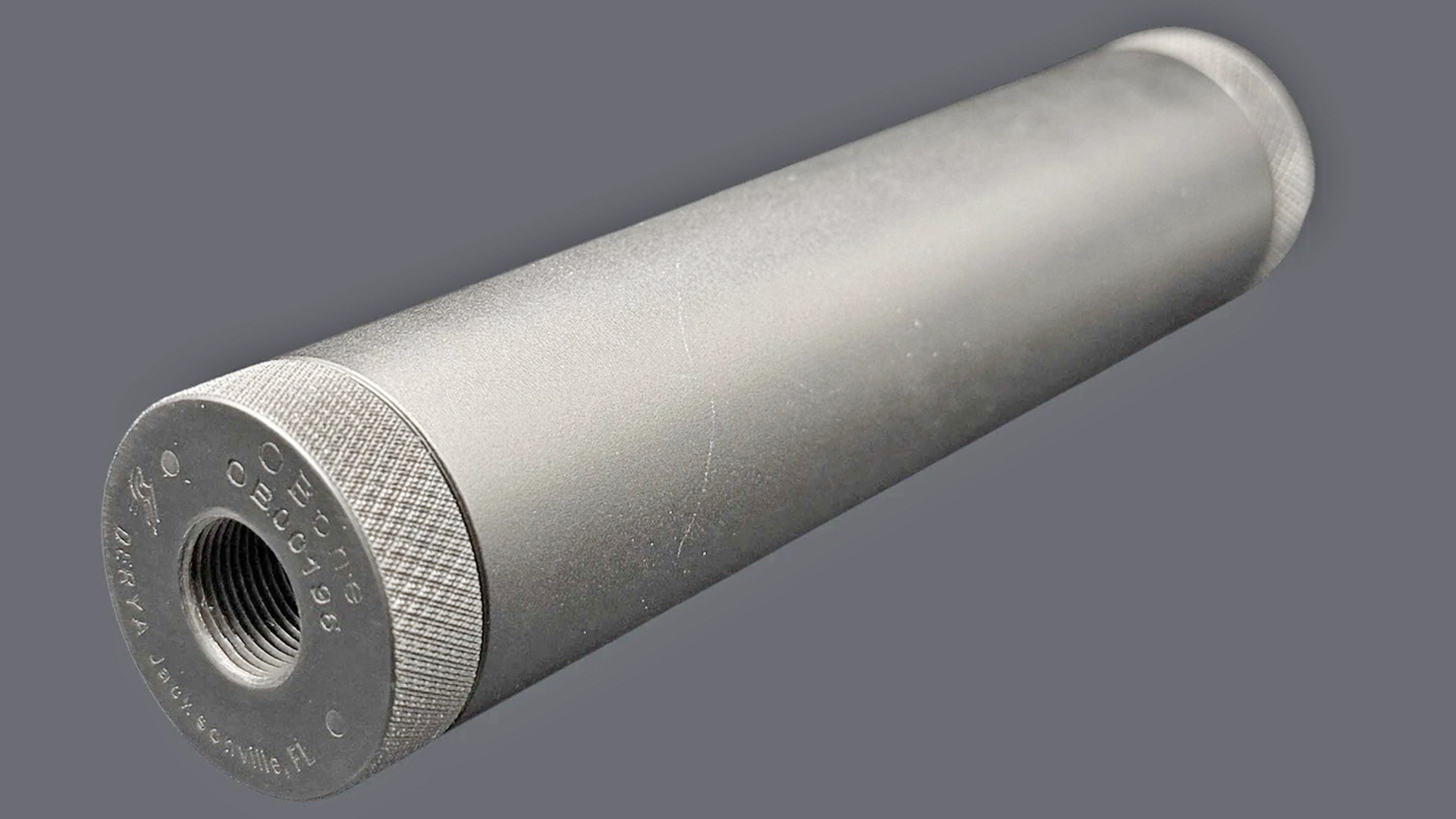
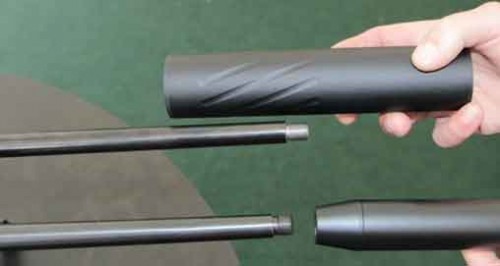
Workman showed me two prevalent styles: end-of barrel models that slightly exceed the barrel diameter, along with a larger type that encapsulates the muzzle end. The former, often used on rimfires, extend a gun’s length by the full measure of the moderator, whereas the latter “can” type adds just a few inches ahead of the muzzle. Workman said the larger ones contain more gas baffles, and thus are more effective at quieting bigger rounds.
The reason UK shooters are so keen on moderators really boils down to common sense and courtesy. Workman said that varmint shooting is especially popular, and widely aimed at controlling foxes and other varmints. Accordingly varmint rifles are in demand, and are also employed for hunting rabbits. Hornady’s .17 HMR has many fans, and the class extends to .22 centerfires as well as .243 Win. The center-fires are also relied on for smaller deer like muntjac (30 lbs.) and roe deer (50 lbs.). Larger calibers are somewhat less prevalent, but are counted on for native big game like red deer.
Even with the small calibers, UK shooters are quite concerned about controlling noise, and thus their reliance on suppressors. Plenty of rural country remains, but most is home to small farms and scattered residences so that shooting and hunting necessarily occur within earshot of others. Brit riflemen want to be neighborly, and that consideration may prove important in preserving the rights they still have. Americans have various reasons for wanting suppressors, but this same considerate approach can’t hurt under similar land-use circumstances, as are found throughout the East and many Midwestern states.
Over the next few days Steve and I will be shooting suppressed rifles at the range and then “stalking” roe deer with moderator-equipped .243s. Check back soon and I’ll share our observations and thoughts.
Most Popular