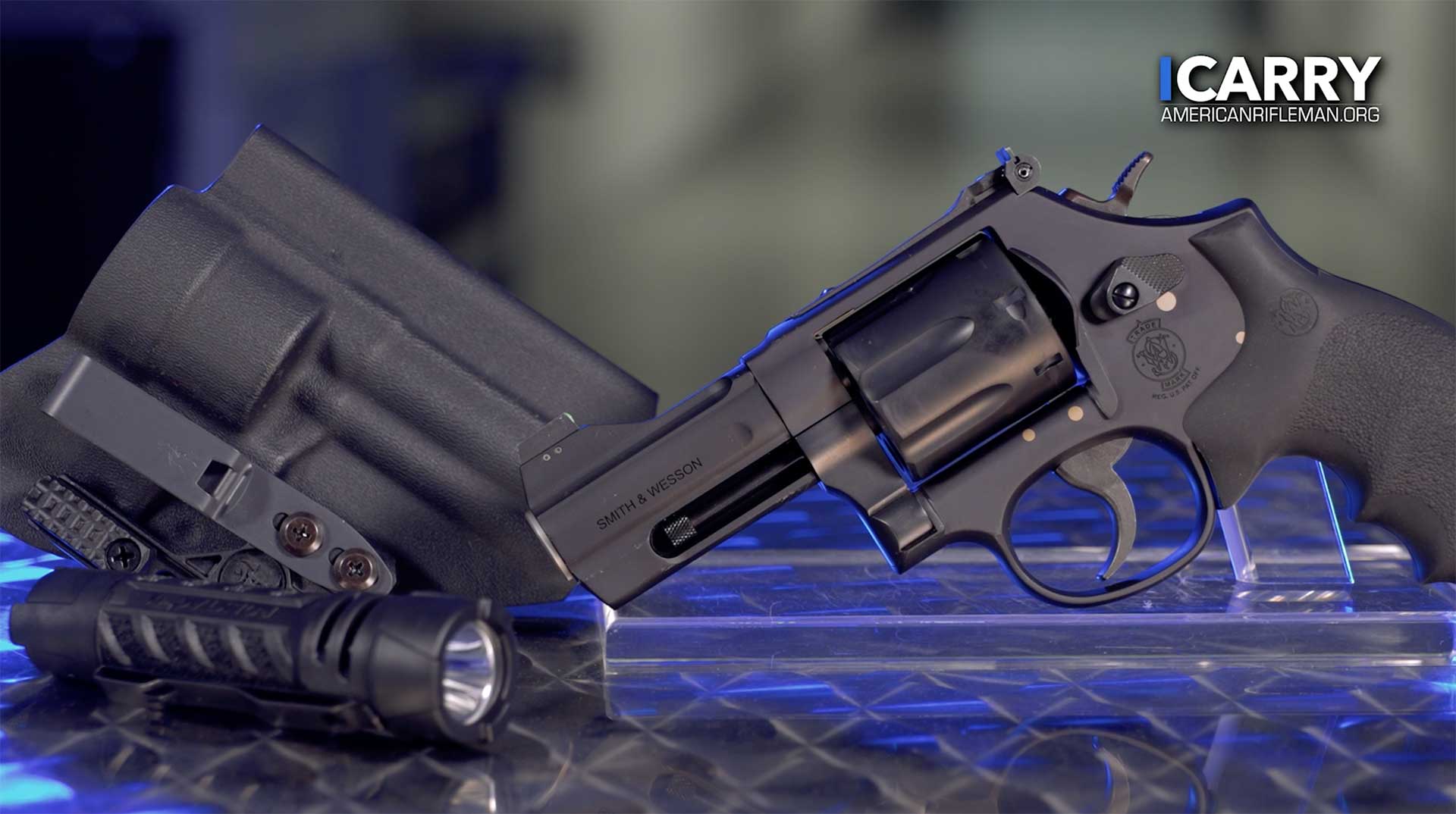
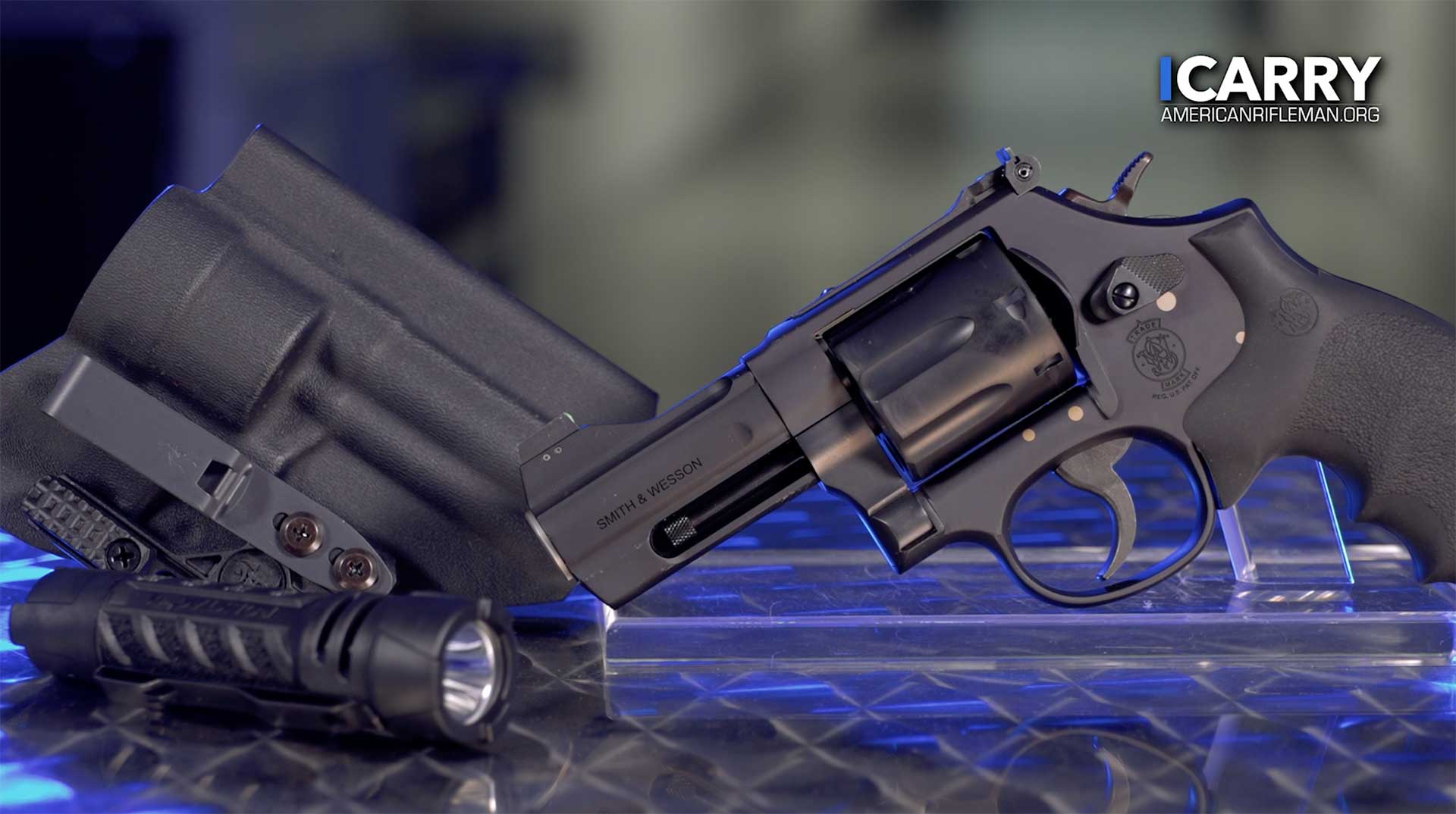
Back in the late 1980's, Smith & Wesson was in the midst of a radical update of the entire product line. This was the era of the Third Generation autos that ended up filling the holsters of the majority of cops in America. It was also the much-mocked “Gun of the Week” era when an absolute flood of new models hit the market with astounding frequency. The company's marketing was, to say the least, aggressive. Eventually, things calmed down and the product line firmed up. In this period, the old line Massachusetts gunmaker produced some of the finest firearms in their history. These weren't all the self-loaders, either. While not all that well known, the Model 629 Classic DX .44 Mag. revolvers of that era may have been the most accurate wheelguns the company ever produced. There weren't that many of them, but they earned their “DX” marking on the basis of objective evaluation. It makes for an interesting story.
The company wanted to introduce a premium .44 Mag. that delivered a great deal of power with the best possible accuracy. Metallic Silhouette shooting was at its peak and more handgun hunters than ever before were afield in pursuit of big game. Both needed accurate, powerful revolvers. The company had just introduced a new variant of the stainless steel .44 Mag. called the .44 Classic Stainless. This revolver had a number of updated features, the most visible of which being a heavy, full underlug barrel. As produced in those days, this was a very high-quality piece, particularly in the sense of shooting very tight groups. Every one of them was fired for accuracy and very few if any were rejected. But the factory staff began to notice that a few delivered accuracy bordering on the spectacular. They hit on the idea of culling out the most accurate ones and marking them differently. Eventually, the shooting evaluation was performed before the markings were applied.
If your version of the gun wears the barrel marking of “Classic DX,” you have one of the better revolvers that ever left the plant in modern times. Depending on what kind of wear is on the gun, the accuracy potential may be as good as it ever was. I once did a very detailed evaluation of several samples of these outstanding guns. At 25 yards, they were all capable of delivering tight one-hole groups with at least one good commercial load and at 50, they never seemed to run outside of the 1.5-inch mark. This means a theoretical group of 3 inches at 100 yards and 6 inches at 200. They came with five interchangeable front sights and an extra-strong, smooth action. I was always surprised that the company never made more than they did. Naturally, these guns were never completely appreciated and are no longer available in the regular catalog.