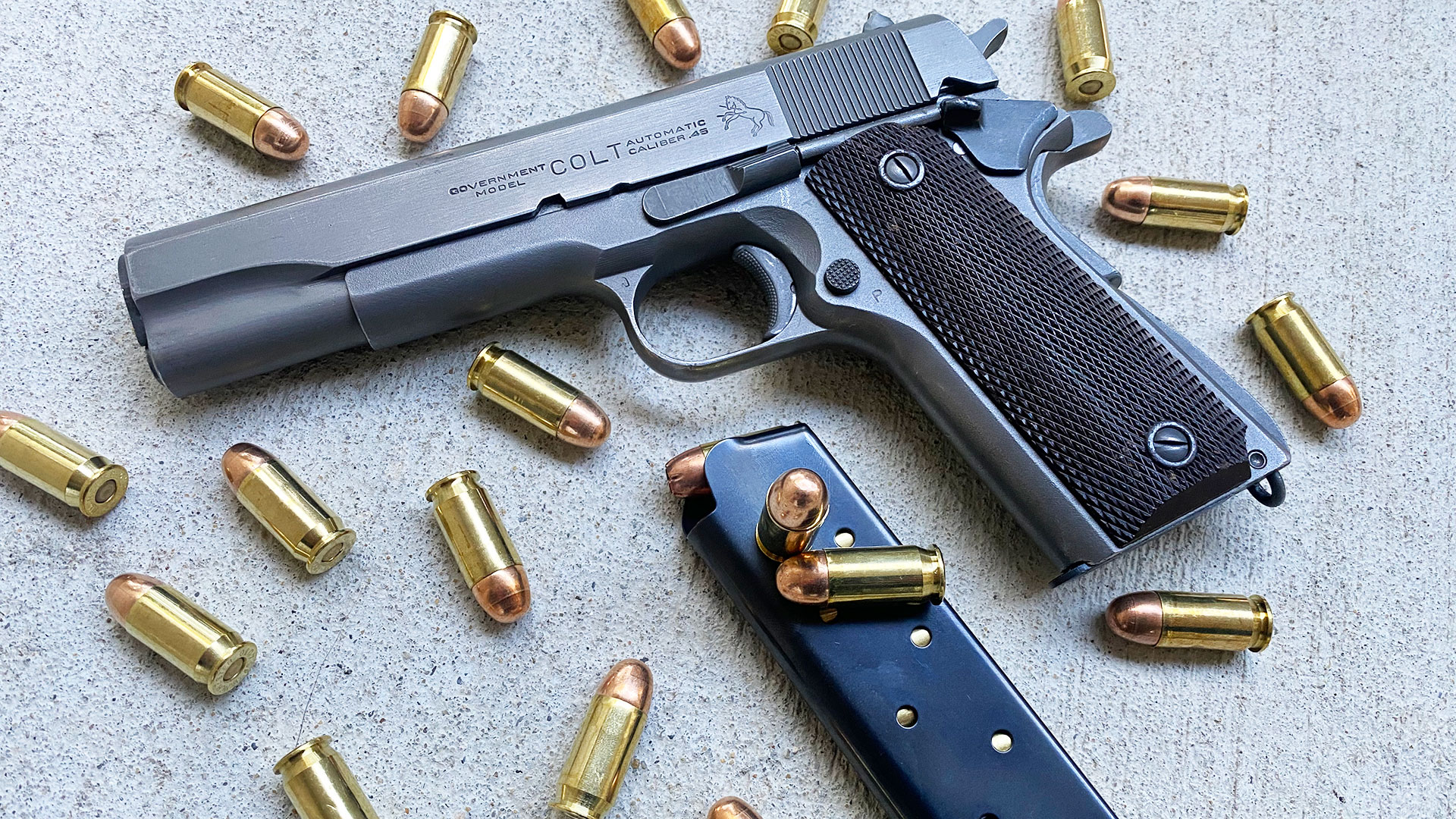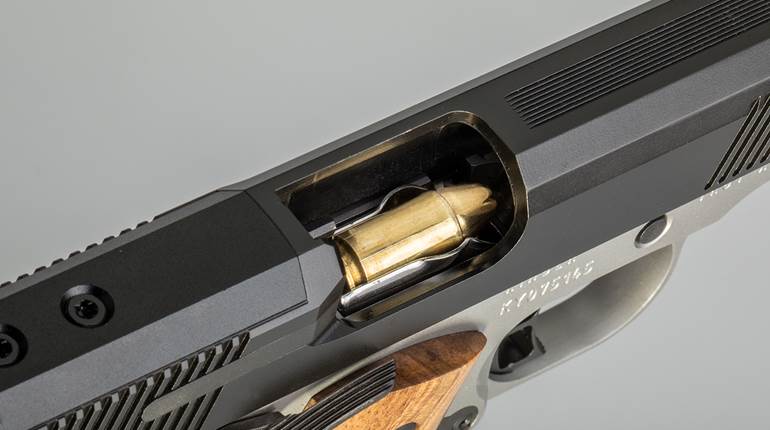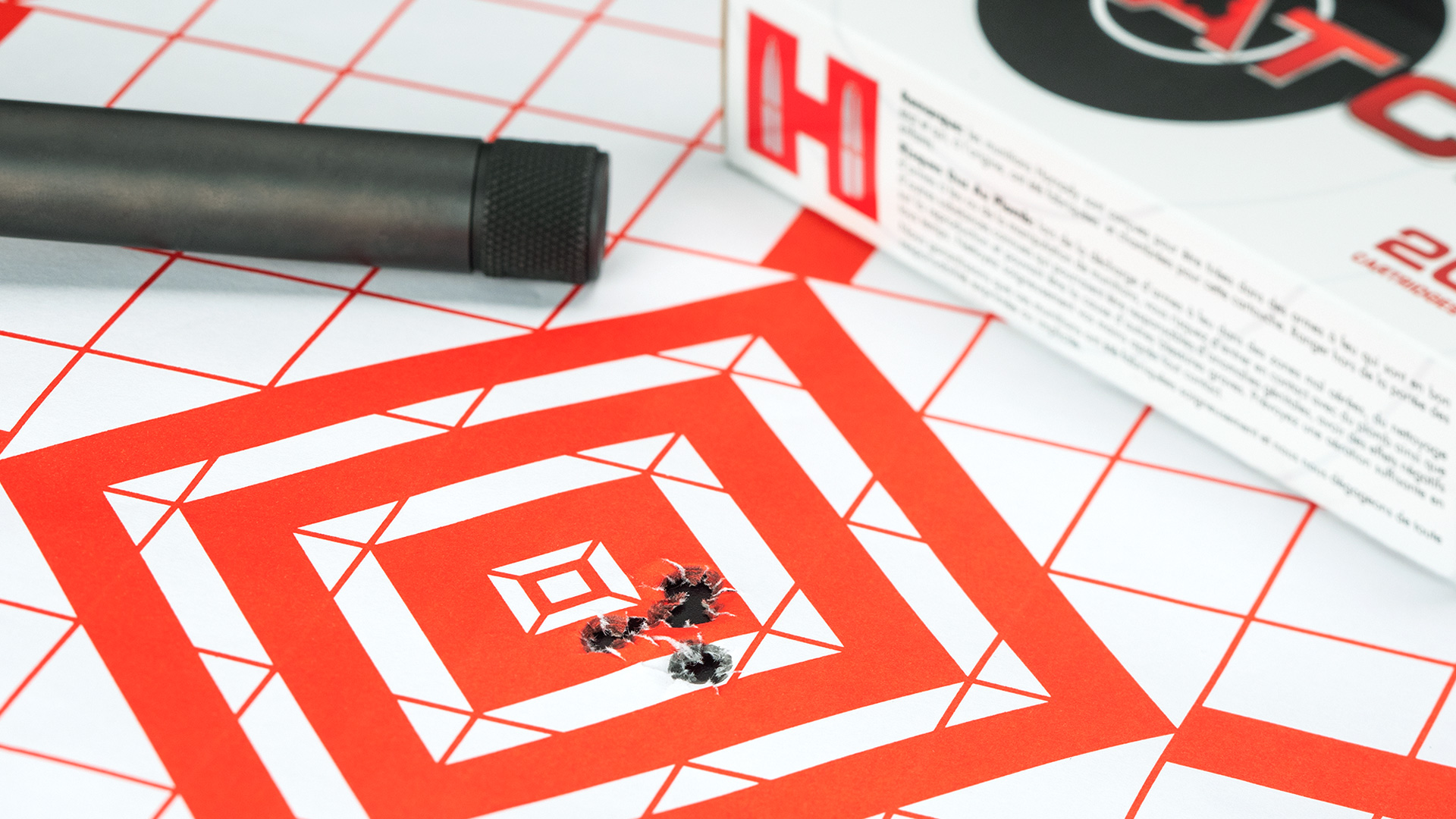
Q. It is necessary to flush-seat the wadcutter bullet in the .38 case when reloading for the S&W Model 52. But is this procedure more accurate than conventional overall-length bullet seating when using the cartridge in revolvers? Is better accuracy obtained minimizing bullet jump from the cylinder to the barrel by loading the bullet to the same depth as jacketed bullets, or is better accuracy obtained by flush seating regardless of the jump to the cylinder?
A. Flush seating is necessary for any wadcutter load. Bullet jump really isn’t much of an issue, and while I am not aware of a study that investigated seating a wadcutter out longer, several tests have shown no difference in accuracy between the same loads fired in .38 Spl. vs. .357 Mag. cylinders, which would provide a similar increase in bullet jump. But there would be one serious drawback to seating the wadcutter bullets out much further. The powder charge would take up a lower percentage of case volume, which would result in lower pressure and lower velocity. In all likelihood, this would also have a negative effect on accuracy. Some cast bullets have a crimp groove that might result in a slightly longer overall length, which is probably negligible; but other than that, I do not think it would be a good idea.
—Charles E. Petty, Contributing Editor
This “Questions & Answers” was featured in the February 2006 issue of American Rifleman. At time of publication, "Questions & Answers" was compiled by Staff, Ballistics Editor William C. Davis, Jr., and Contributing Editors: David Andrews, Hugh C. Birnbaum, Bruce N. Canfield, O. Reid Coffield, Charles Q. Cutshaw, Charles M. Fagg, Angus Laidlaw, Evan P. Marshall, Charles E. Petty, Robert B. Pomeranz, O.D., Jon R. Sundra, Jim Supica, A.W.F. Taylerson, John M. Taylor and John W. Treakle.
To subscribe to the magazine, visit the NRA membership page and select American Rifleman as your member magazine.
Most Popular