Rifleman Q&A: .22-Cal. Cartridge Compatibility

by
posted on July 8, 2022
** When you buy products through the links on our site, we may earn a commission that supports NRA's mission to protect, preserve and defend the Second Amendment. **
.22-Cal. Cartridge
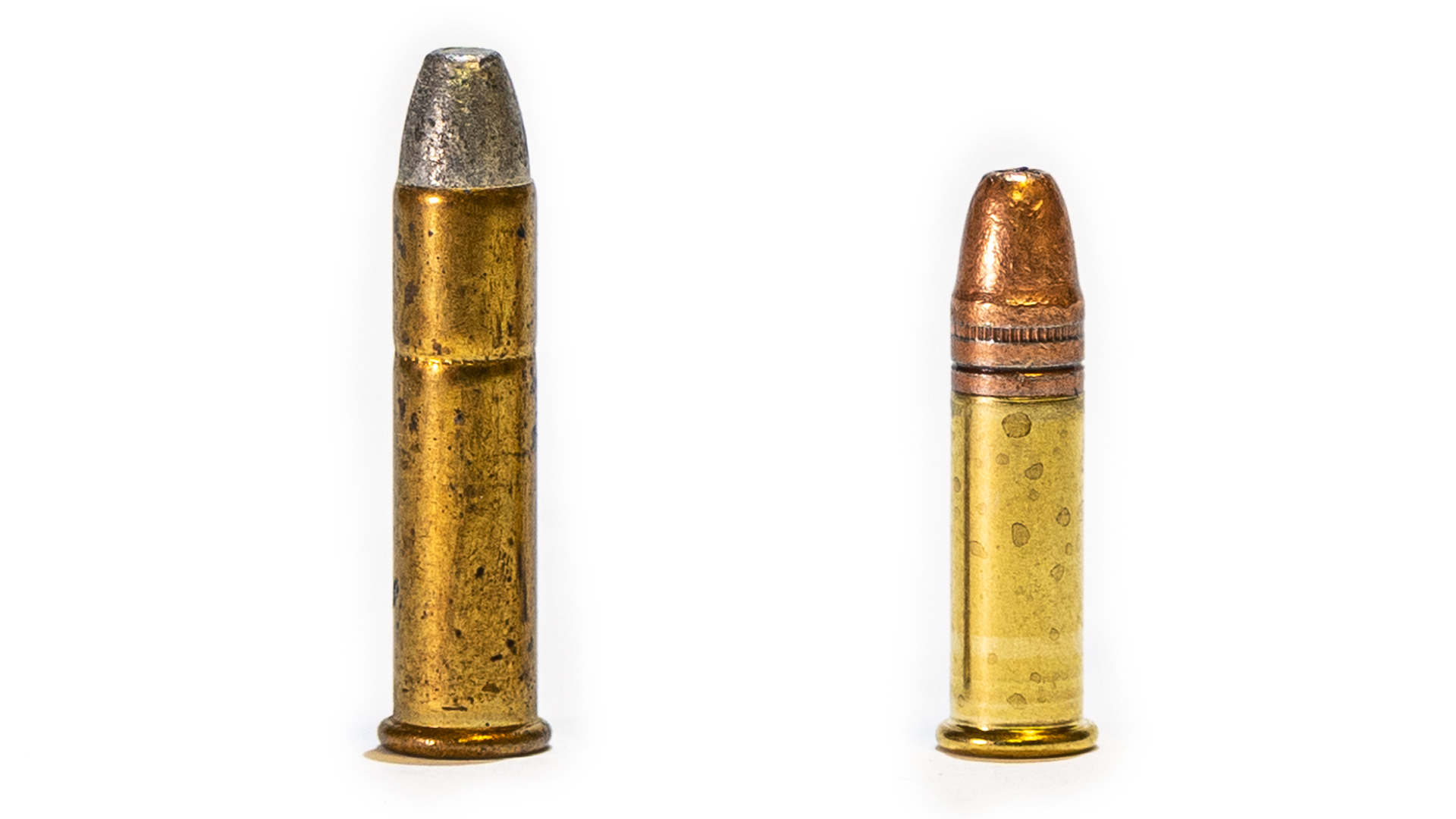
.22 Winchester Rimfire shown above (l.) next to the .22 Long Rifle cartridge (r).
Photo by Christopher Olsen

Q: I own a Winchester 1890 in .22 Winchester Rimfire and a Model 62 in .22 Long Rifle. Will a .22 LR fit in the WRF chamber and fire without danger to the firearm and user?


A: With few exceptions, it is generally never advisable to attempt to chamber or fire any sort of cartridge other than that for which the firearm is designed and hopefully for which it is marked or otherwise indicated. The exceptions typically include those situations involving a “family” of cartridges, usually straight-walled and headspacing on a rim, where the difference between cartridges is primarily only a matter of case length. It is usually acceptable to fire the shorter cartridge in the chamber for the longer sibling. Examples would include: .38 Spl. in a .357 Mag.; .44 Spl. in a .44 Mag.; .32 S&W in a .32 S&W Long; .45 Colt in a .460 S&W Mag.; .22 WRF in a .22 WMR; and .22 Short and Long in the .22 Long Rifle.

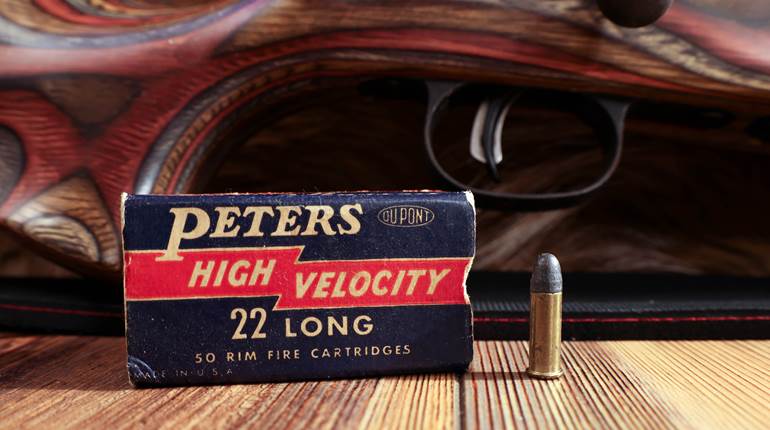
In the case of .22 LR and .22 WRF, the dimensional differences include not only case length but both rim and case body diameter. The .22 LR cartridges will fit loosely in the .22 WRF chamber and rim recess, but they will usually be held at the rim so that attempting to fire the round will usually be successful. Because the small case is largely unsupported, however, it will expand within the limits of the larger chamber, usually splitting from end to end, releasing gas and byproducts of ignition by any avenue available within the firearm, potentially causing harm to the shooter, bystanders and perhaps the gun itself. Removal of the split case from the chamber can also prove to be problematic.

—John W. Treakle, Contributing Editor

Latest

Subsonic Ammo 101
Subsonic Ammo 101

Subsonic Ammo 101: Everything The Suppressor Shooter Should Know

Slower-than-sound rounds are an art as much as a science. For target shooting, bullet upset is not important, but if you’re using subsonic loads for hunting or self-defense, it becomes critical.

I Have This Old Gun: Model 1874 Gras Rifle

Following the Franco-Prussian War of 1870, the French military were in desperate need of a new service rifle. Their answer was the Model 1874 Gras, which was largely an update to the earlier Chassepot design.

Compact & Quiet: CMMG's ZEROED Banshee

CMMG has expanded its Banshee line of AR-style rifles with the ZEROED, a firearm that is optimized for suppressor use.

Making the A-Cut: Springfield Armory's COA-Ready Operator, TRP & DS Prodigy Pistols

Springfield has already released a COA-ready version of its Echelon earlier this year, and the new models will bring the A-Cut to the company’s hammer-fired handguns, including the 1911 Operator, 1911 TRP and 1911 DS Prodigy.

Skills Check: Snake-Eyes Drill

Our drill this month trains you to form a stable firing platform early enough to gain optimal control before the shot breaks. Timing is of the essence.

A Memorial Day Conversation With Grey Team

Grey Team was founded to help armed services members and veterans with the physiological impacts traumatic brain injuries, post-traumatic stress disorder, chronic pain and more.

Interests


Get the best of American Rifleman delivered to your inbox.