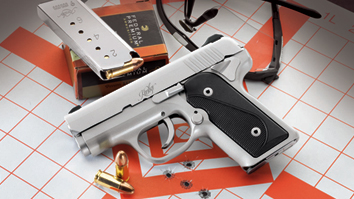
I’ve heard a lot of complaints about the Kimber Solo not functioning properly. As a gunwriter, a curious person and a fan of Kimber, I decided to find out if the fussing was accurate.
First, I talked to some of the others in the office. A couple of people said they had had issues with the Solo not feeding with certain magazines. It seemed as if some magazines worked fine, while others caused the slide to lock back even though there were rounds in the magazine. Looking at the magazines, I thought that some were slightly longer in length than others. Surmising that this could be the problem, I measured every magazine we had in house. A caliper showed that all the magazines were within .01 inches of each other, meaning this is probably not the problem.
Next, I headed to the range with a Solo, six magazines and a few boxes of 9 mm ammunition. I quickly noticed that while the Solo’s magazines are rated for six rounds, putting in that sixth cartridge took some strength. Also, the top round would be crooked in the magazine unless care was taken to get it just right.
After seating the magazine in the gun, I pulled the slide fully to the rear and let it go. The gun did not go into battery. Instead, it caught about half way forward, and required a hard shove to seat the round. Once loaded, however, it ran all six rounds without a problem. In fact, every magazine worked perfectly, even when conducting follow up drills from the low-ready position.
I ran more than 100 rounds through the Solo without a single malfunction while firing. I even tried limp wristing to force a malfunction to no avail. The only problem I had was when trying to load the gun with a fully loaded magazine. While the gun would strip a round, it would usually require a push to put the gun into battery. This was not a problem if there were only five rounds in the magazine.
With the results I received, my first thoughts run to break in period. I personally believe that most handguns need to have a few hundred rounds run through them before they will run properly, especially guns that have tight tolerances, such as Kimbers. And this includes magazines. I won’t carry a gun for self-defense until I have become completely familiar with it, which requires a few boxes at the very least, and I prefer 300 to 400 hundred. That’s about how many it took to get my carry gun, which is a Kimber, in perfect working order.
Most Popular