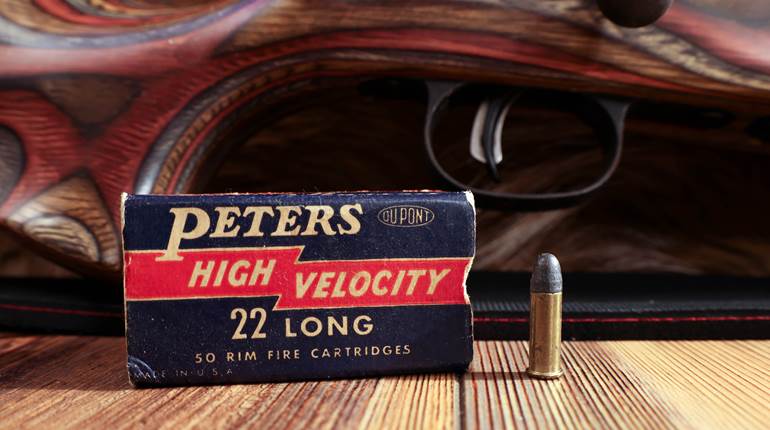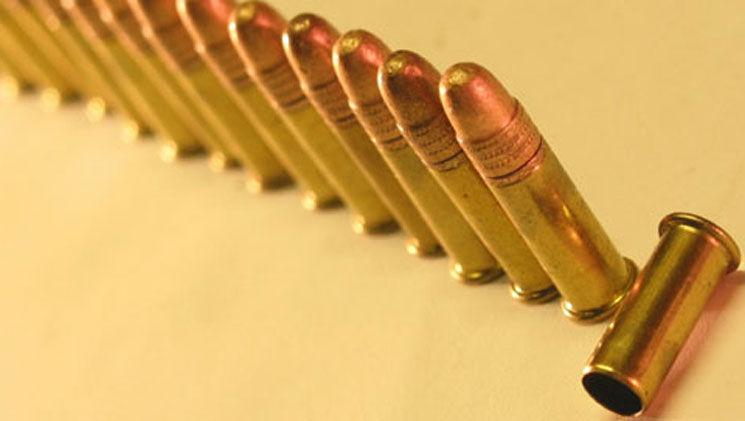
While this question has become less common, it never has gone away. In many areas, .22 rimfire ammunition has evaporated again. “You need to address this!” I've written about this quite a few times, but it still comes down to basic supply and demand. And judging from what has been happening worldwide in the news, we are looking at another record month in demand for firearms and ammunition. And .22 Long Rifle is always the canary in the coal mine.
Demand has increased dramatically yet no large American ammunition maker has added a new rimfire ammunition plant. Remington has one in Arkansas, Winchester has one in Mississippi, Federal has one in Minnesota and CCI has one in Idaho. They have been running full-out since 2008 and have been expanding plants as possible—and they are as efficient as they possibly can be.
The reason why ammunition manufacturers can increase capacity on center-fire cartridges is because that machinery is fairly inexpensive (compared to rimfire machinery) in the big scheme of things. A guy with a couple of Dillons in his garage and some time on his hands can be a center-fire ammo maker if he can get components—especially primers. And, the big guys can make center-fire primers or buy them from other makers more easily than one can prime rimfire brass.
Expanding rimfire production, not so much. A rimfire ammunition plant requires a priming area that is something that has not been newly fabricated in the United States probably for 40 years. Of course, the big American ammunition makers have updated theirs, but they have not added any brand-new facilities at new locations (Winchester did move its rimfire plant from Illinois to Mississippi). It is the priming operation of rimfire ammunition manufacture that takes the large amount of production time.
Frankly, it's not easy and there are numerous safeguards in place because this is a fairly dangerous manufacturing operation trying to squeegee the wet priming compound into the case rims of rimfire cartridges. And the manufacture of priming compound, which is highly explosive, is not for the careless or squeamish. And I am also unsure what trying to obtain financing and insurance for the creation of a new rimfire plant would be like. And if billions of dollars were to be sunk into a new rimfire plant—if a location could be found and approved—would the demand stay high enough to justify it?
The good news is that some foreign manufacturers that have existing rimfire plants are putting more rimfire ammunition—imported ammunition—into the commercial market here in the U.S. Aguila, for example has been importing large quantities of .22 Long rifle, and we are seeing Sellier & Bellot, Fiocchi and Armscorp filling the pipeline. Norma and Eley, although pricier than most CCI, Federal, Remington and Winchester, can be found. And, at least in local stores, that is what I am seeing on the shelf more often than not—imports and the “good stuff.” The familiar American brands go first and fastest.
If you're having trouble obtaining rimfire locally, you may want to try some of the Internet ammunition retailers, including Midway USA, Mid-South Shooters Supply, Cheaper than Dirt and Brownells. Sportsman’s Guide has it sometimes, too.
So long as demand remains at levels previously not encountered, and production cannot be increased beyond the capacity of the existing plants, we will likely continue to see shortages of .22 rimfire for some time to come. The shortages we see today are fewer than they were a couple years ago. But that helps you not at all if there is none on the shelf of your local big box retailer.
Most Popular