Walther Arms emerged in the late 19th century and focused exclusively on sporting rifles. Even after the turn of the 20th century, company founder Carl Walther wasn't focused on the emerging market of semi-automatic pistols. Instead, it was his son, Fritz, who understood where the company needed to go. Watch our "American Rifleman Television" I Have This Old Gun series above for the details on one of the company's most popular early designs, the Model 4.
"Carl Walther isn't really paying attention to the pocket pistol market. He doesn't do anything in that realm. It's his son, Fritz, that notices what's going on," American Rifleman Executive Editor Evan Brune said. "And he gets his hands on a couple of modern pocket pistols and he goes through them and takes them apart and, and he's fascinated by this, and he tells his father, 'We need to get in on this. We need to design something that can compete in this growing market.' And so Walther starts making pocket pistols in 1908."
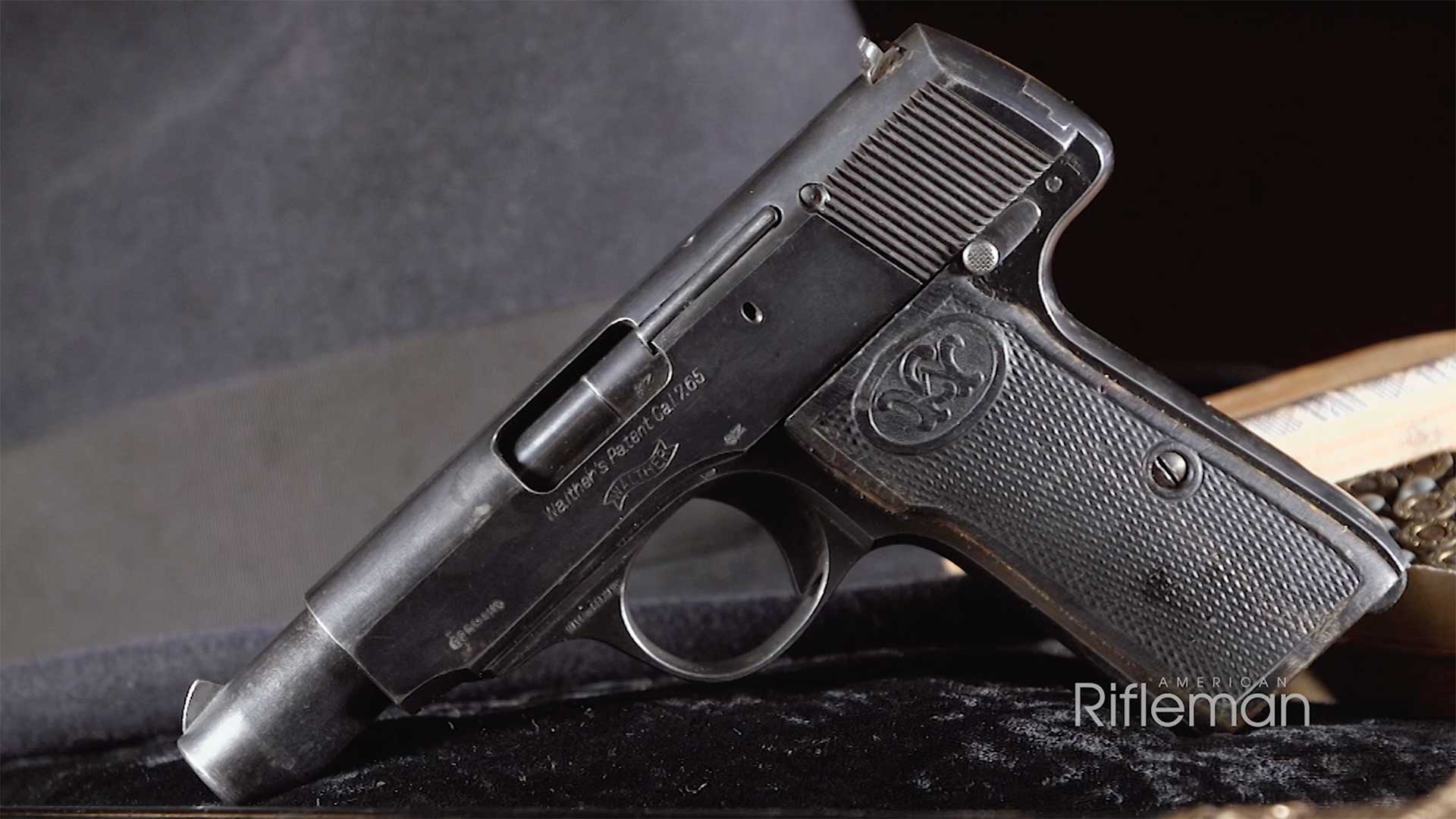
The earliest handguns from the Walther firm emerged in 1908 and were chambered for the .25 ACP cartridge, but by the eve of the First World War, several standout designs emerged in the Model 3 and Model 4 pistols, which were simple, blowback-operated handguns chambered for the .32 ACP cartridge.
"But it's the Model 4, Model 1914, that was really, I think, the most important of the lot," NRA Media Editorial Director Mark Keefe said. "This gun was a blowback. But it didn't put the recoil spring where other guys had put it. This recoil spring actually surrounded the barrel. When you look at a Model 4, you have kind of a squarish back to the gun, and then you have what appears to be a very thick barrel, but it's not. Your recoil spring is actually captured around the barrel, so you don't have to have a separate recoil spring and guide rod assembly below the barrel because the barrel is the guide rod."
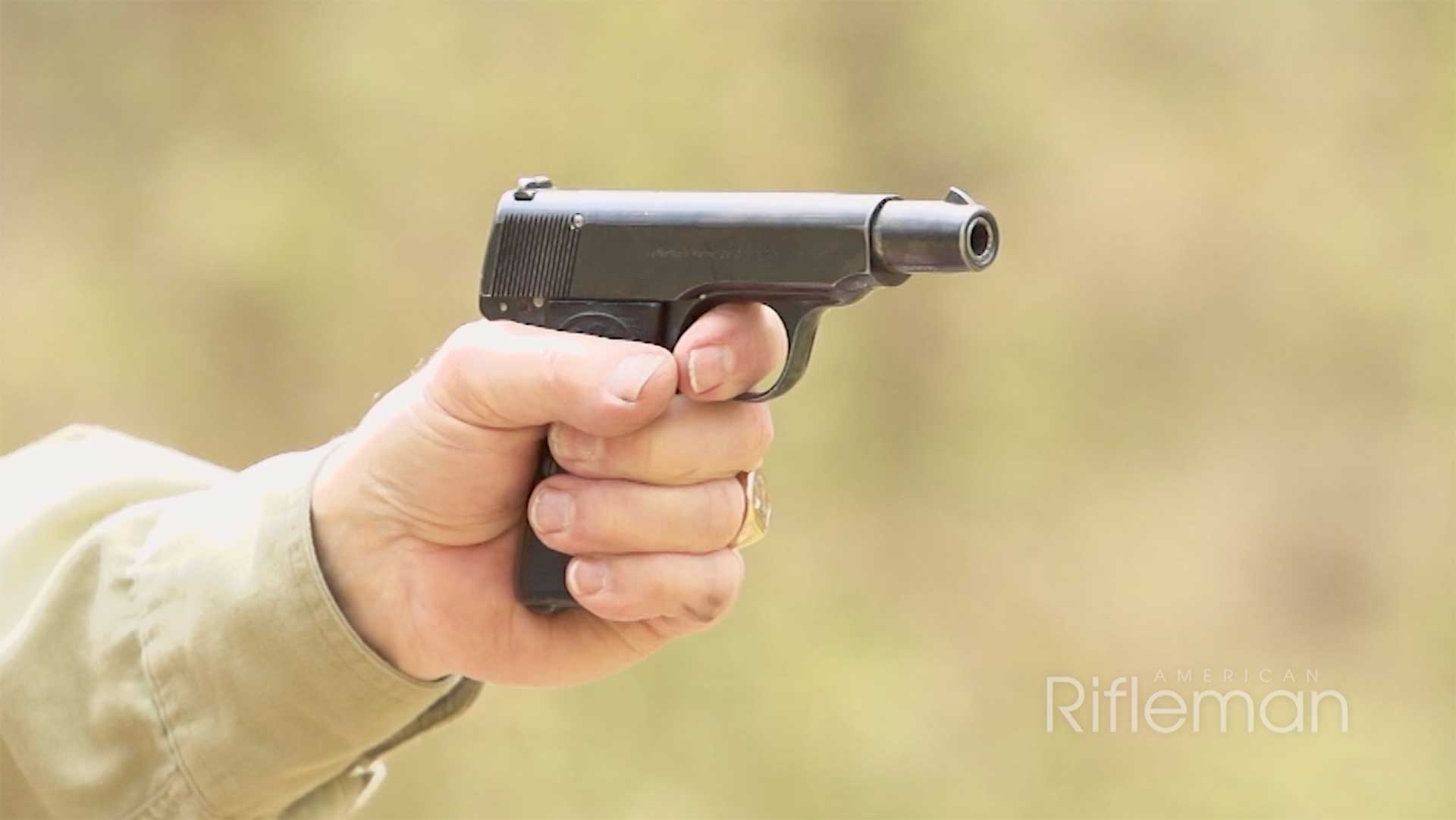
Ultimately, the German army accepted the Model 4, then termed the Model 1914, into military service, and more than 75,000 of the guns saw military use during World War I.
"[The] Model 4 is a wonderful, wonderful little gun. It was basically a variant of the Model 3, although the grip was extended a bit,, so that it could hold eight rounds of .32 caliber or 7.65 mm ammunition," American Rifleman Field Editor Garry James said. "And it came out in plenty of time for the Great War. And naturally, the Germans were pressing everything they could into service, and the Number 4 was no exception. They were also highly, highly popular with the civilian market. Lots and lots and lots of them were imported to the United States."
To watch complete segments of past episodes of American Rifleman TV, go to americanrifleman.org/artv. For all-new episodes of ARTV, tune in Wednesday nights to Outdoor Channel 8:30 p.m. and 11:30 p.m. EST.