One of the more unique-looking military revolvers from the late 19th century is the Reichsrevolver, also commonly known as the German Commission Revolver. Two models were ultimately produced, the first in 1879 and the second in 1883. Watch our "American Rifleman Television" I Have This Old Gun segment above to see the details of these large, heavy-duty sidearms.
"The German Reichsrevolver is an interesting gun. It's also, it has kind of a nickname. It's called the Commission Revolver," American Rifleman Field Editor Garry James said. "Because why? It wasn't devised by just one person. It was put together by a committee. And like any gun put together by a committee, it looks like a camel, which is said to have been put together by a committee."
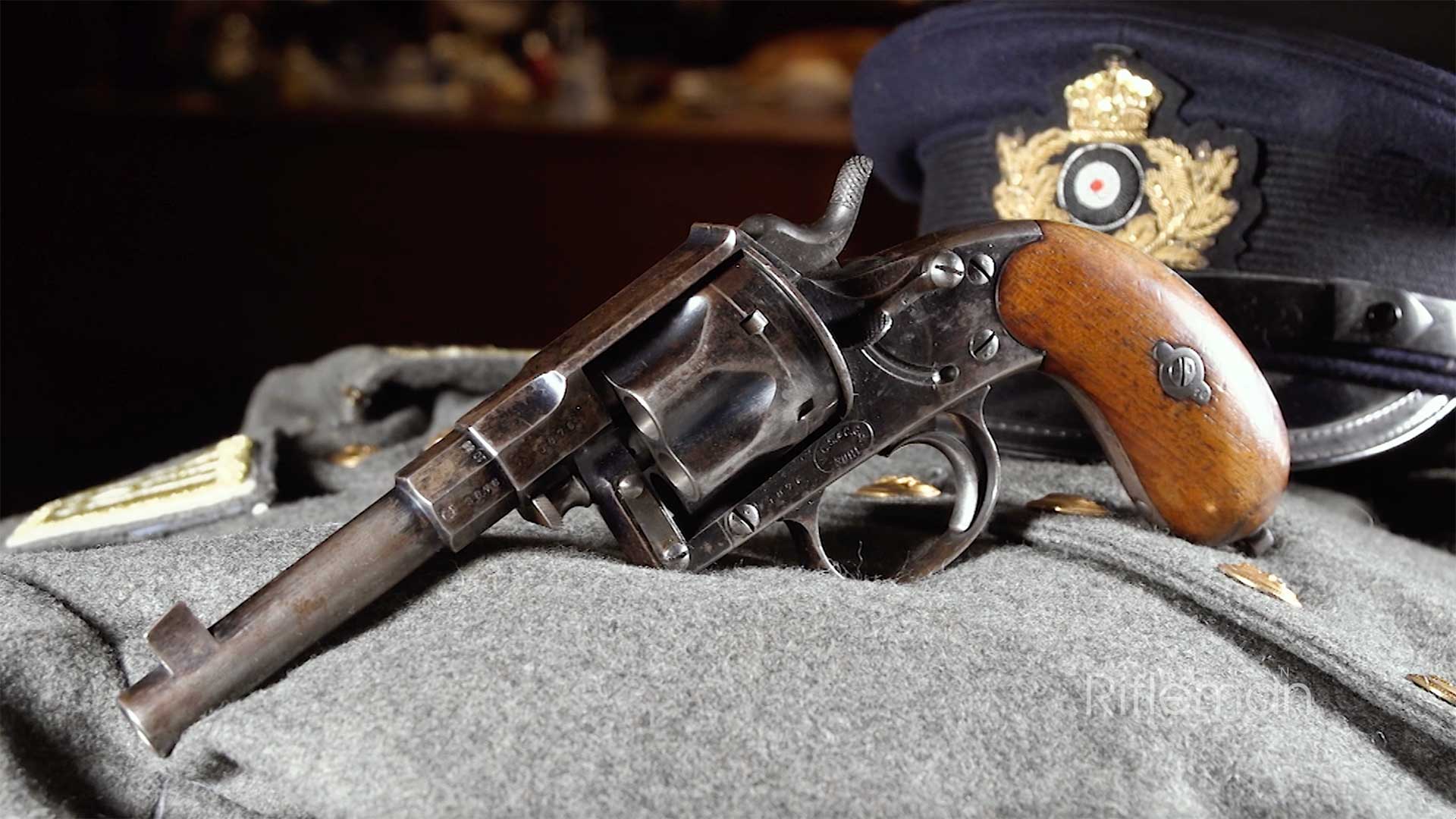
The first of the guns, made in 1879, had a 7" barrel with an annular ring at the muzzle, which was followed up in short order by a smaller model in 1883 equipped with a 5" barrel. These arms today have been referred to by collectors as, respectively, the cavalry model and the officer's model. Inside the gun, lockwork was reminiscent of the Smith & Wesson Model 3.
"It's over-engineered. And I don't mean that in a mean way or a stereotypical way," NRA Museums Director Phil Schreier said. "It's just, it's a centerfire, single-action revolver, 10.5 mm cartridge, like a .44-40. But it's a solid piece of work. I mean, it's the most solid revolver I think I've ever held."
Outfitted with a six-shot cylinder, unlike other revolvers of the era, the Commission Revolver had no built-in provision for extracting or ejecting spent cartridge cases. Instead, a small rod was issued with each revolver, and users would be required to manually remove each spent cartridge case by poking through the front of the cylinder with the rod.
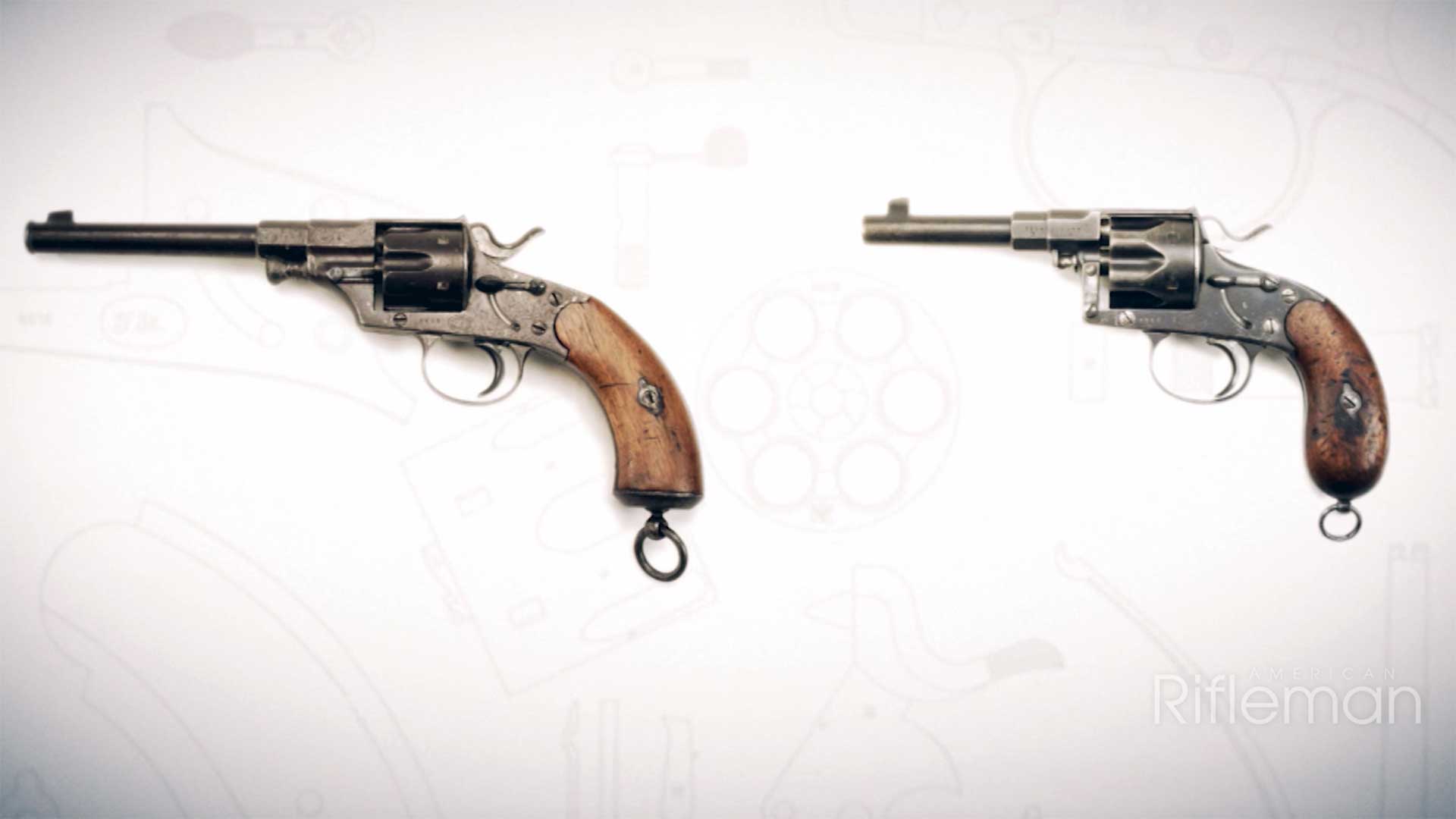
"It had a couple of really unique, notable features," American Rifleman Executive Editor Evan Brune said. "People tend to notice on the left side of the frame, it's got this big, long lever. It's actually a safety lever. It's a manual safety on a revolver. Which, you know, that's the running joke is, you know, you think 'Safety? Revolvers don't have safeties.' Well, this one, this one had a safety."
Ultimately, the German Commission Revolver would be supplanted at the beginning of the 20th century by a number of semi-automatic designs, notably the P08 Luger. However, the guns remained in use in German colonial possessions until the end of World War II.
"The crazy thing about that gun today is it's worth a lot of money," Schreier said. "You can't find cheap ones at gun shows. Especially with an original holster. Quite the collector's item."
To watch complete segments of past episodes of American Rifleman TV, go to americanrifleman.org/artv. For all-new episodes of ARTV, tune in Wednesday nights to Outdoor Channel 8:30 p.m. and 11:30 p.m. EST.