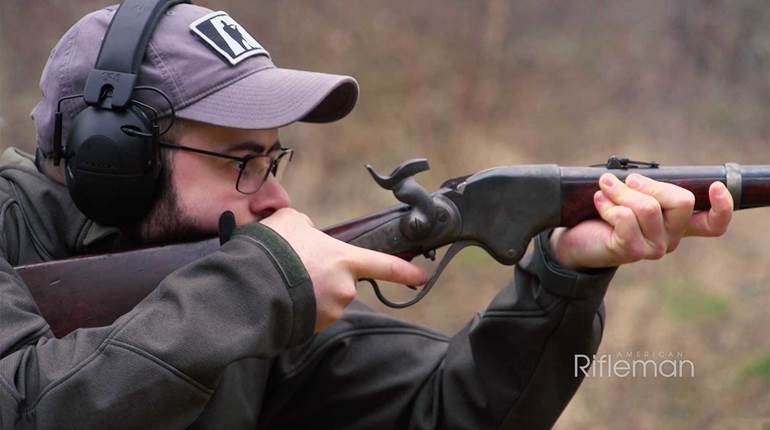
Q. I am inquiring about an 1860 Spencer Repeating Carbine for my brother. Some information states this carbine went into service in July 1863 at Gettysburg-other sources state it went in service in 1864. Could you verify for me when it did go into service and tell me what other military Spencers there were?
A. The first delivery of Model 1860 Spencer carbines was on Oct. 3, 1863. The shipment consisted of 1,000 carbines, and they were chambered for the .56-56 rimfire cartridge. Although the carbines were produced in greater numbers and saw much wider issuance, a rifle variant of the Model 1860 Spencer was also manufactured. During the Civil War, a total of 45,733 Model 1860 carbines and 11,471 Model 1860 rifles were produced under U.S. Army Ordnance Department contracts.
Approximately 1,000 additional Spencers-mainly rifles-were purchased by the U.S. Navy during this period. Near the end of the war, the Model of 1865 Spencer carbine was introduced. It differed from the Model of1860 in several respects, including ashorter barrel.The Model of 1865 was chambered for the improved .56-50 Spencer rimfire cartridge.The first shipment of Model 1865 Spencer carbines was on April 3, 1865.Approximately 34,500 Model 1865 Spencer carbines were produced by Burnside Rifle Co., along with another 24,000 made by Spencer Co. No Model 1865 Spencer rifles are known to have been made for the U.S. military, although a relatively small number, perhaps 1,000, were produced for civilian sale.

After the close of the Civil War, the Spencer carbine remained the primary U.S. Cavalry arm. Most of the Model of 1860 Spencer carbines still in inventory were modified for the .56-50 cartridge. The Model 1865 Spencer carbines and the converted Model 1860 carbines remained in front-line service until the early to mid 1870s when they were replaced by the Model 1873 “Trapdoor” Springfield carbine.
-Bruce N. Canfield
Originally published July, 2006
Most Popular