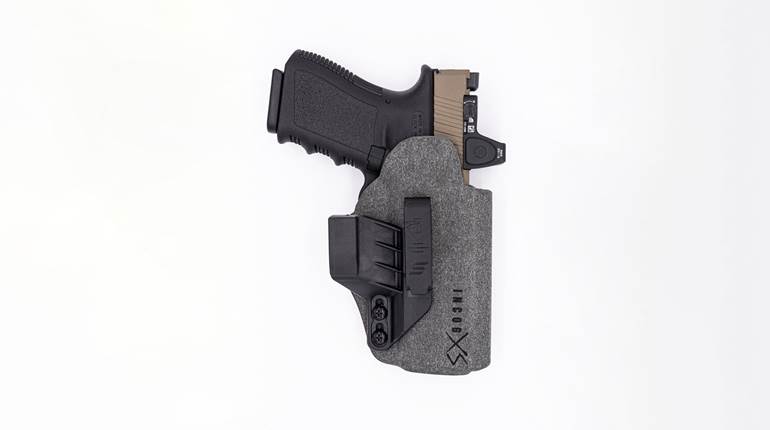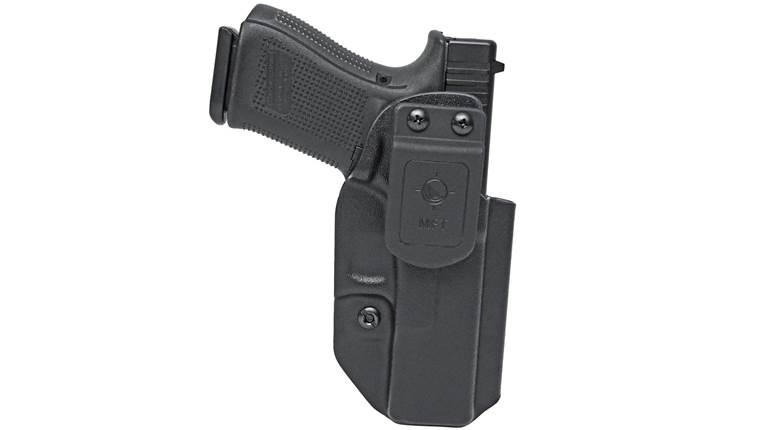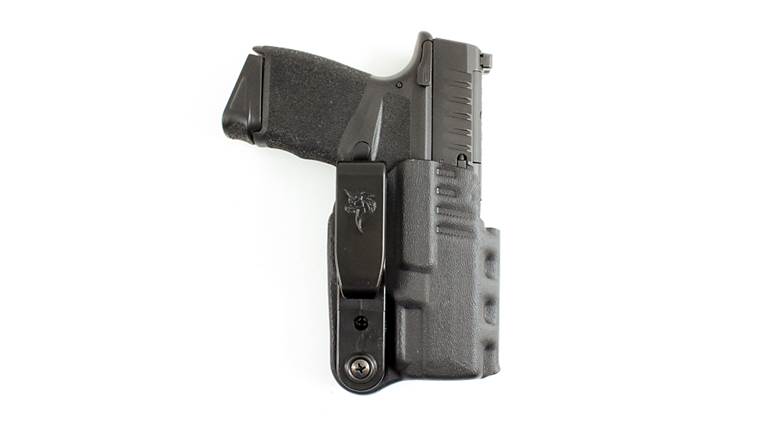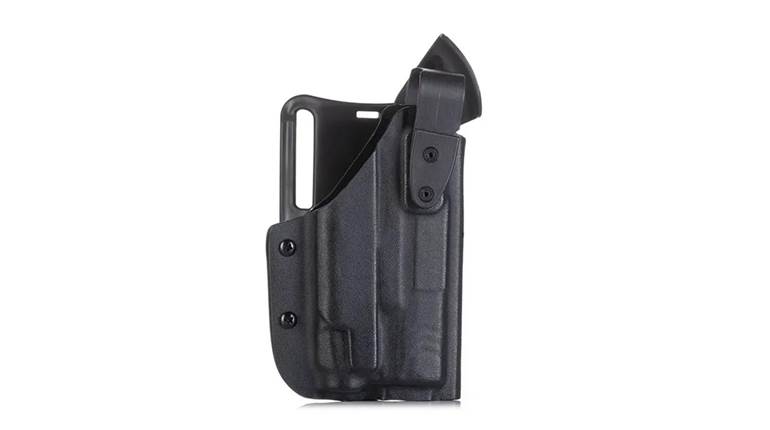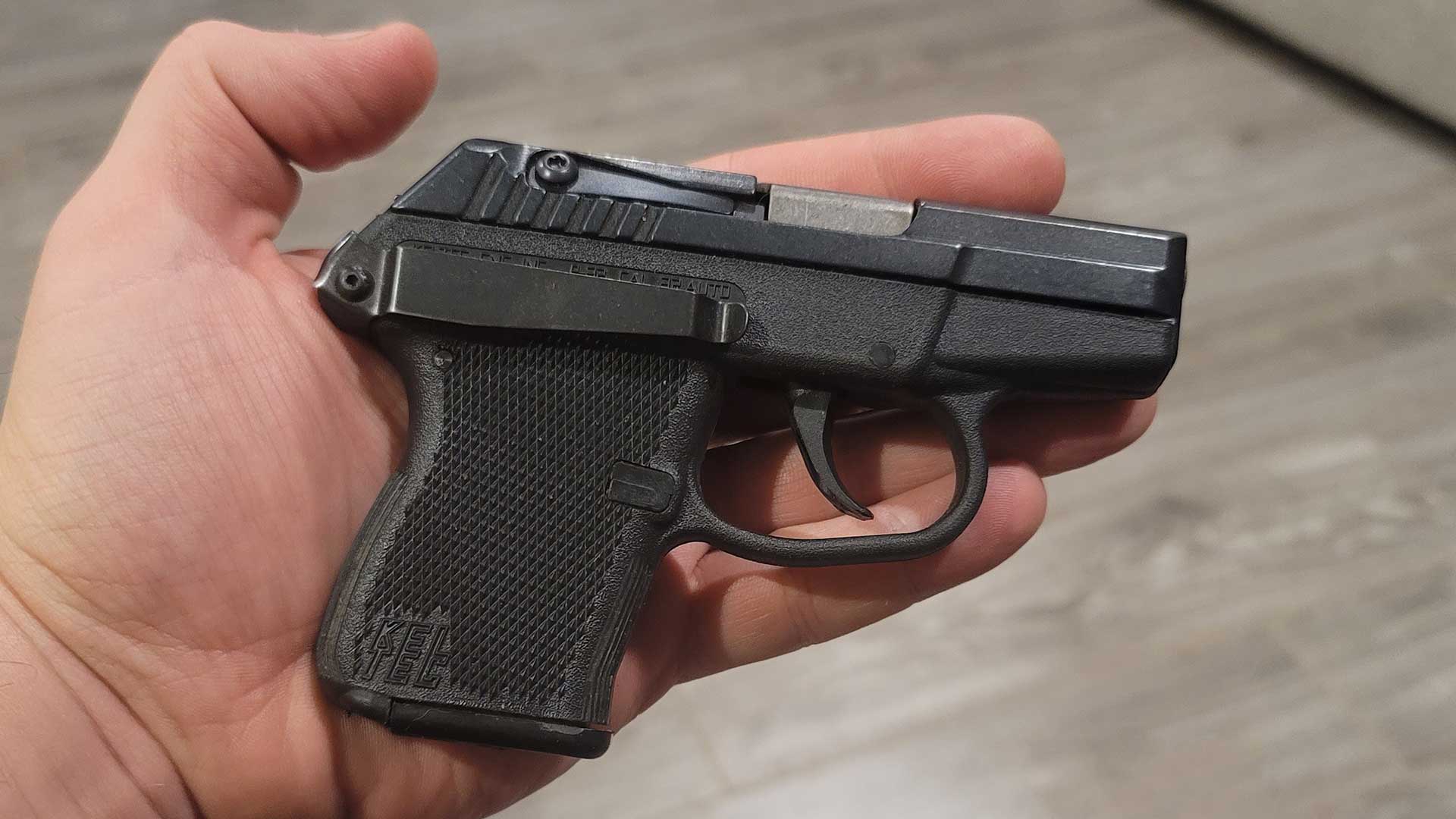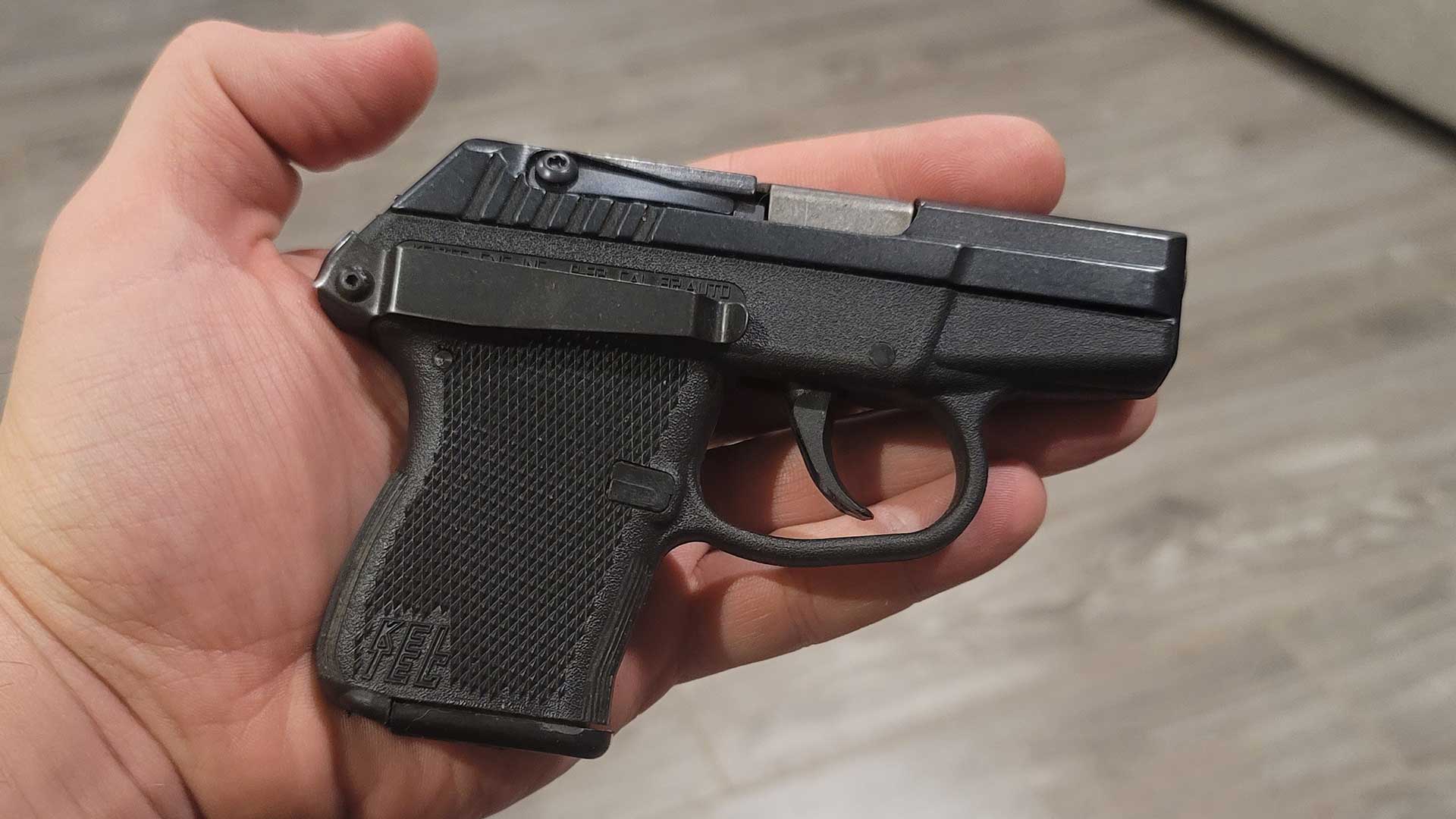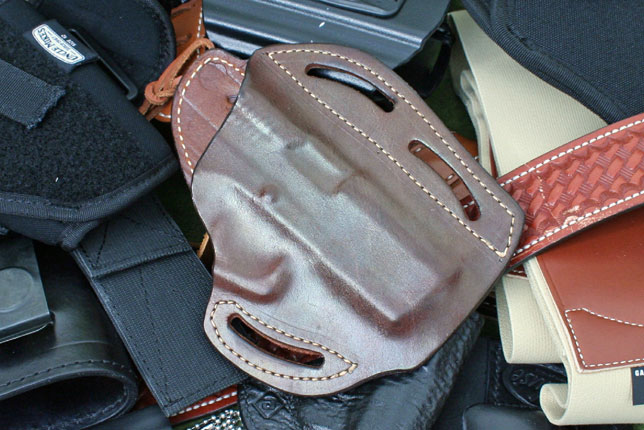
Finding the right holster system for daily concealed carry can be a challenge when there are so many makes, models and materials to choose from. (Take a look at our Holsters 101 and Holsters: Hybrids & Exotics galleries and you'll see what I mean). But a well-designed carry holster, no matter what it's made of or where it rides on the user's body, needs to be as safe and reliable as the handgun it supports. So here are a few pointers to keep in mind when selecting and testing your carry rigs:
1. Provides a Reliable Level of Retention

All holsters have two primary retention-related functions. One is to keep a handgun inside it until the user chooses to draw it. The other is to stay physically attached to your body.
Generically speaking, holsters are designed to retain pistols and revolvers using one of two mechanical methods: active retention or passive retention. Active retention devices are manually engaged or disengaged by the user. These include straps that snap in place over the rear of the gun and buttons on the top or side of the holster that are depressed by the index finger or thumb. Active retention was developed primarily for those who openly carry side arms into dangerous situations, including law enforcement and military personnel.
Passive retention holsters do not require any action on the part of the user to release the gun except pulling on the gun's grip. These systems essentially rely on sideways pressure or strategically placed indentations in the holster material to secure the gun. They include polymer holsters with adjustable retention screws, wet-molded hard leather holsters contoured to the gun, and in-the-waistband holsters that flex a little under the pressure of the cinched-up belt to help squeeze the gun and keep it in place. Passive retention holsters are usually recommended for concealed carry because of their simplicity of operation.
This discussion about proper retention may sound blatantly obvious but it's important to remember that when a holster fails, it tends to do so at the most excruciatingly inconvenient moments. I was recently testing a holster that relies upon a hook-and-loop fastener. I had worked with it at home enough to think it was ready for a trip into town. But on that particular trip, the fastener was pulled loose, somehow resulting in the holstered pistol sliding down my leg and rattling across the floor while I was waiting in line to pay a cashier. Luckily, the store was almost devoid of customers and I was able to scoop up and pocket the pistol before anyone noticed. Needless to say, this incident has curbed my enthusiasm for that model considerably. Do your best to test your holsters at home before using them. If it seems like a holster will not retain the gun reliably, then throw it away and find something better.
2. It Stays Where You Place It

A holster may hold onto the gun and stay attached to your body like it's supposed to but if it allows the gun to shift around too much it's going to cause problems. I remember using an inexpensive clip-on in-the-waistband holster years ago that left me feeling like a small animal was trying to dig a winter den in my hip. As a new concealed carrier, I talked to a friend at my preferred gun shop and lamented the fact that I would have to buy a different gun. Knowing that I was fresh to the scene, he kindly recommended a holster upgrade. Low and behold, the gun suddenly became bearable and, before too long, comfortable to wear. So look for rigs that hold on and stay put.
3. Allows For Quick Re-holstering

The last thing you want to have happen in a defensive situation is to be the one holding a gun when the police arrive. You may find other reasons to re-holster as well, like freeing up your hands to help the injured. Ideally a carry holster will have a ridged construction that remains open and ready to receive the handgun after it's been drawn. But what about those conveniently squashy pocket holsters, belly bands and pocketed undershirts? If you choose to use a soft carry system that flattens out as the gun is removed, then be prepared with a means or method for securing the handgun on your person after it's been out and about.
4. Contributes to Concealment
For folks who are new to carrying concealed, it's likely some wardrobe changes will be required. You may need a strong support belt and cover garment for a hip holster, deeper pockets for a pocket holster, or longer pant leg cuffs to cover an ankle holster. But some holsters are better at hiding a handgun than others. When considering hip holsters, look for models that hold the gun close to the body. Some pocket holsters just protect the pistol while others are designed to change the outline of the gun to make it harder to identify. Look for ankle holsters with strong support straps to keep them from wobbling around or slipping down too low on the leg.
5. It Fits Your Daily Functions

Not everyone moves through their daily routine in the same way, so part of the holster selection process requires a closer look at how you spend the majority of your time. Someone who walks a good deal may find an ankle holster to be a real grind, while someone who sits most of day may get a crick in their back from a behind-the-hip holster. It's not uncommon to have more than one holster system on hand for differing activities and modes of dress.
Some folks live where they use different holsters for the changing seasons of the year or one rig for casual dress and another for more formal occasions. If you find yourself leaving your carry gun at home because it's just too uncomfortable to wear, changing the holster location may solve the problem.