** When you buy products through the links on our site, we may earn a commission that supports NRA's mission to protect, preserve and defend the Second Amendment. **
Gallery
1 of 1
Ringing Steel
Team NRA captain John Bailey hammers the steel plates with a Smith & Wesson M&P 15-22.
1 of 1
Team NRA
Team NRA got together just before the rifle matches. From left, Darren LaSorte, Randy Clark, Kyle Crew and team captain John Bailey.
1 of 1
Shooting a Sharps
Another side match was shooting a genuine Sharps 1874 rifle, chambered in .45-70. This rifle, made by Christian Sharps in 1877, fired more than 400 full-house, blackpowder loads during the two-day event without a hitch.
1 of 1
Airborne Archery
Using flu-flu arrows, contestants had five tries to hit an aerial target.
1 of 1
More Than Guns
One of the 17 side matches was this tomahawk throwing contest sponsored by Benchmade Knives.
1 of 1
Not Easy
Many contestants found the sporting clays leg of the match quite challenging.
1 of 1
Starting it Off
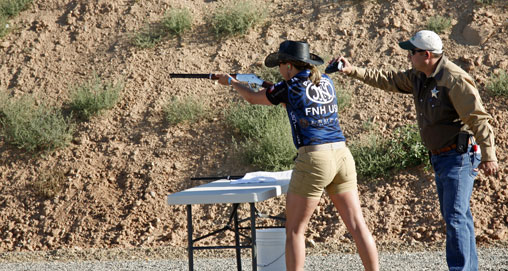
Former NRA editor Tes Salb fired the first shots at the Shooting Industry Masters tournament with a rimfire semi-auto.
1 of 1
It’s Western
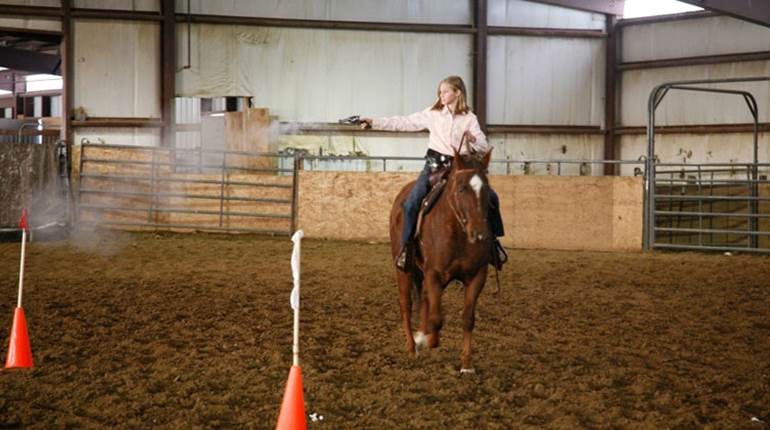
Contestants were required to shoot a compressed version of a cowboy action match featuring two revolvers, a lever-action rifle and a double-barreled shotgun.
One of the most revolutionary shoulder arms of the American Civil War, the Model 1860 Spencer carbine went from being an experimental design at the war's beginning to ultimately becoming the official issue arm of the U.S. Cavalry by war's end.
Serving during World War I in 1918, my father completed two years in the Engineer Corps. In addition to his engineering duties, he and all the other soldiers had to carry and qualify with the Model 1903 Springfield rifle, since they were often on the front lines.
Winchester Ammunition opened a new office in Clayton, Mo., which will accommodate much of the company's full-time administrative staff and is located several hours away from the Lake City Army Ammunition Plant.
Bitten by the cowboy handgun bug early on—and influenced by no less an innovator than Elmer Keith—the author finds that, in the search for the ultimate single-action revolver, perfection is an elusive target.