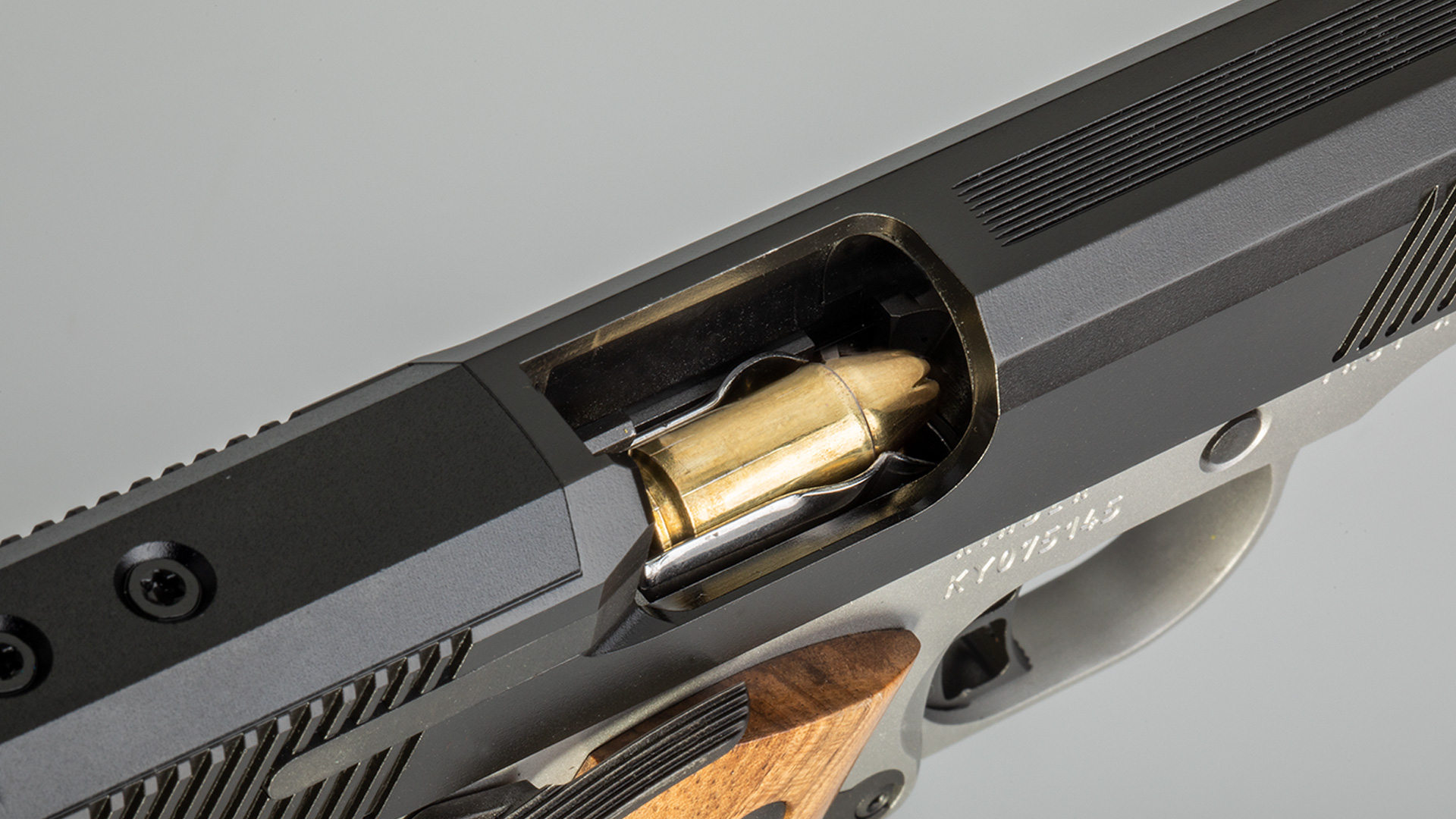
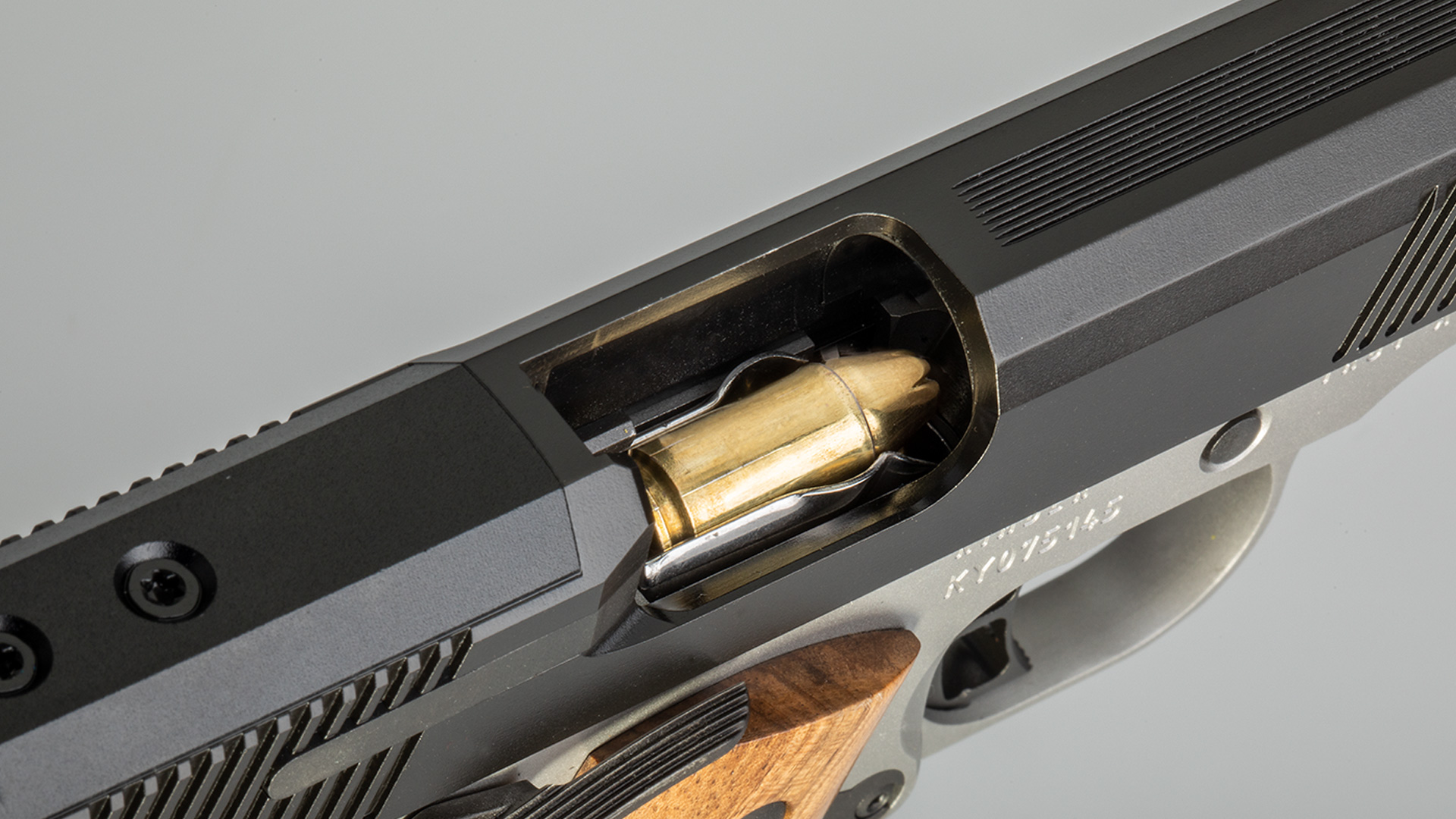
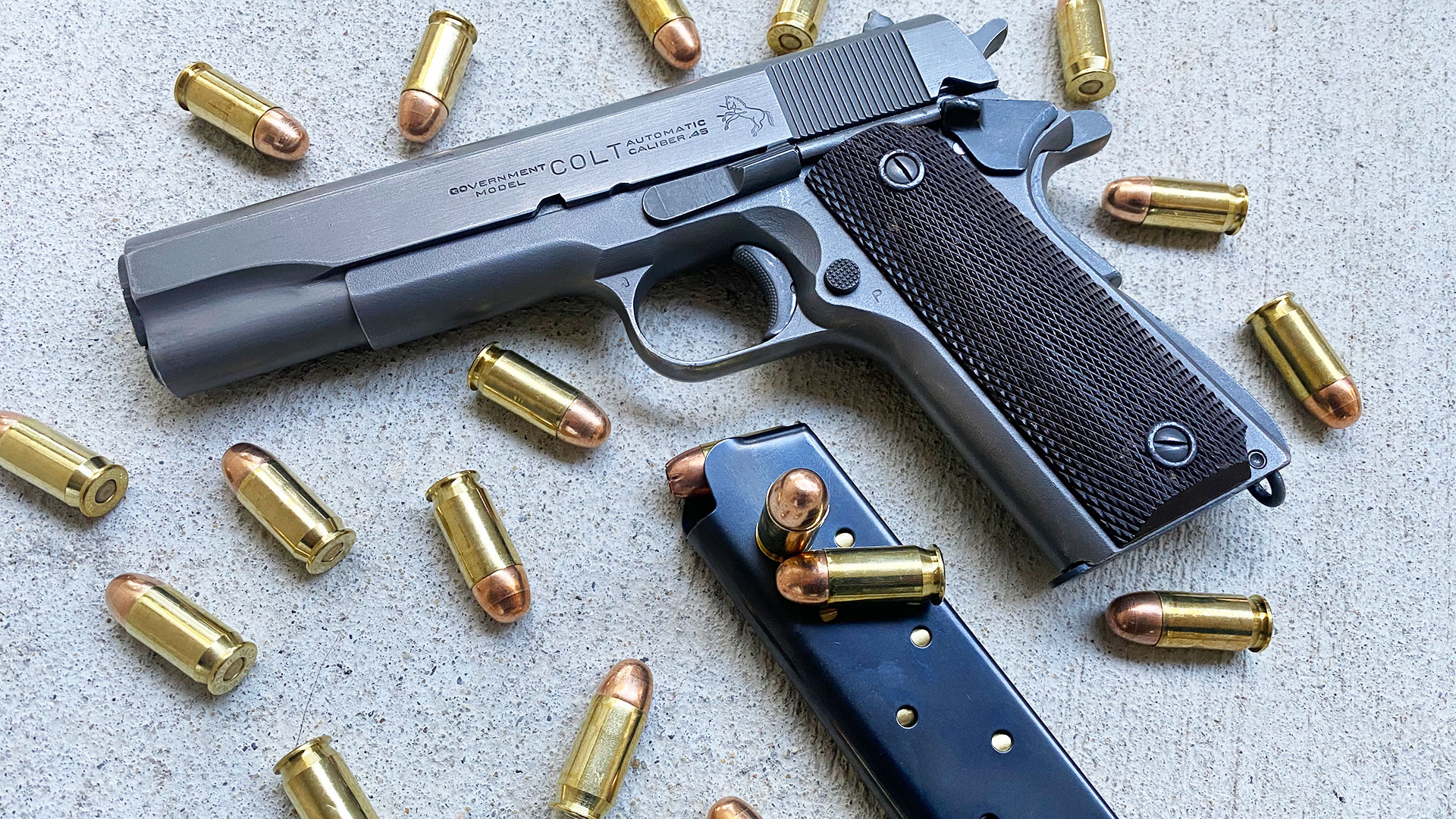
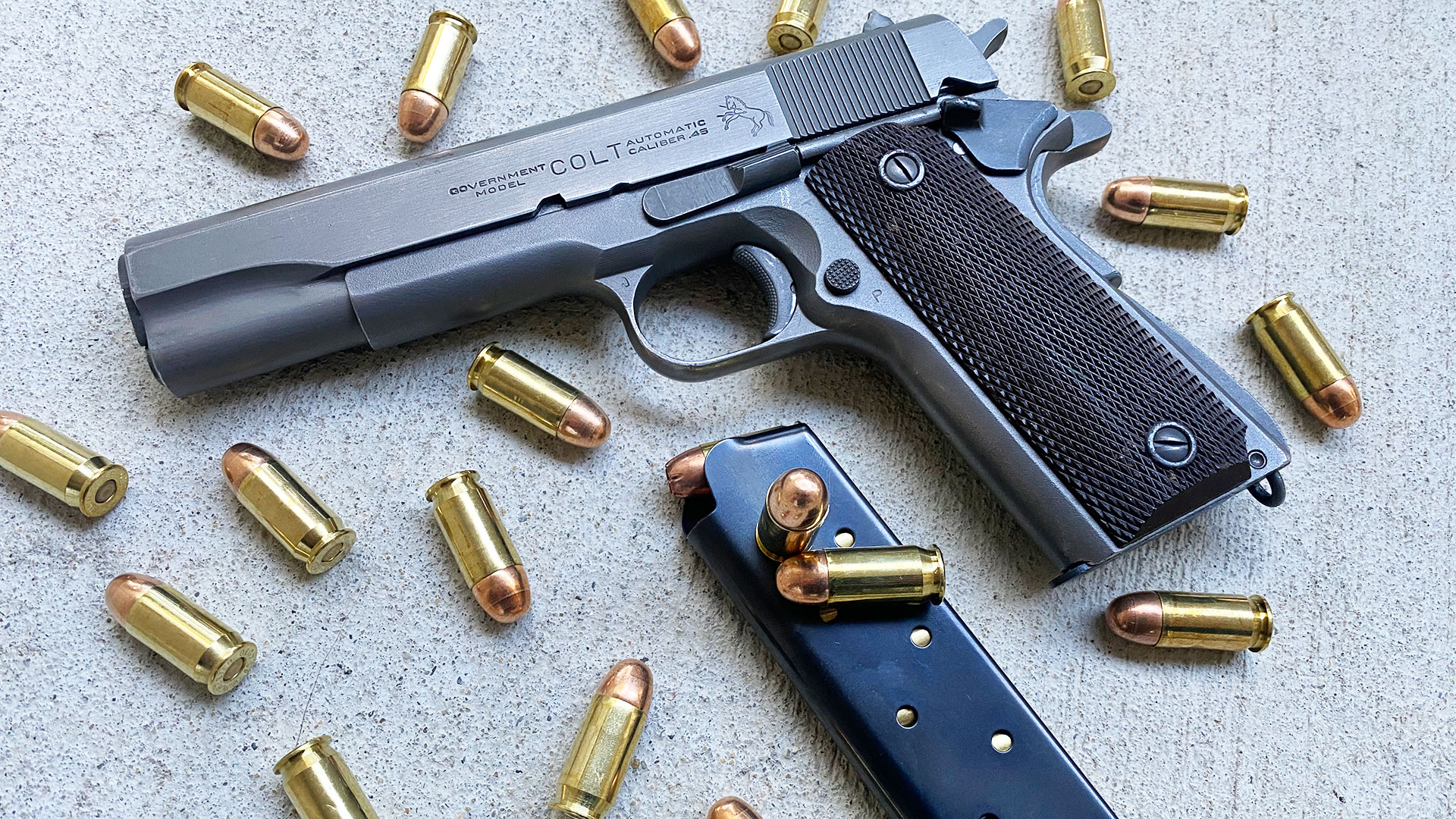
A reader e-mailed with a question about the use and actual shape of feed ramps in modern pistols. He had apparently witnessed a catastrophic failure in a popular brand off semi-automatic pistol chambered for the 9 mm Luger cartridge. From this, he had begun to believe that certain types of so-called “unsupported” feed ramps were inherently unsafe and the use of supported ones would eliminate failures of this type. First of all, the use of some kind of feed ramp is virtually required in all pistols for efficient operation, with some feed ramps integral to the barrel and others in the receiver. Some manufacturers even build a feed ramp into the magazine. I genuinely believe that no maker (and certainly not the one the reader had named) would ever offer a pistol for sale that had a dangerous design flaw. There is simply too much at stake. The design of a particular feed ramp is developed to achieve efficient operation and not to cut corners.
In the same light, the reader's request for a listing of the type of feed ramps used in common pistols is beyond the research capabilities of this author. I would need one of all of them and I don't have them. As it turns out, the reader was concerned—and understandably so—about the use of handloaded ammunition in his guns. I used to be an avid handloader and wrote a number of articles on the subject. Unhappily, that is not something with which I am deeply involved with these days. However, I can recall the elaborate care that went into everything I did at the handloading bench, as well as when I was writing on the subject.
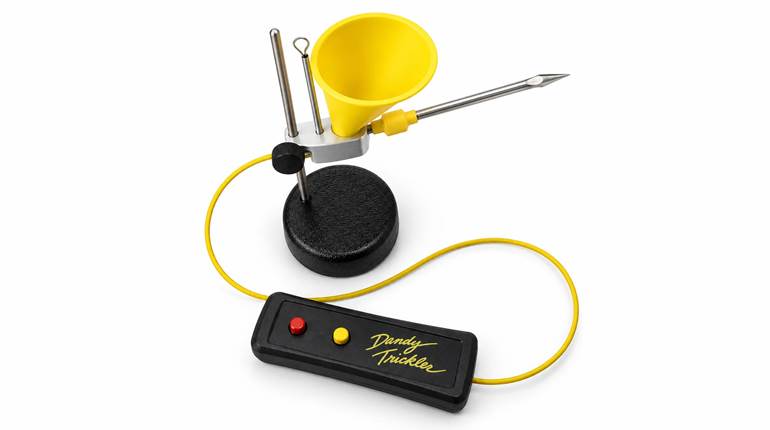
It is possible to go out to my loading shop and assemble something that will immediately destroy a top-quality gun. This, however, would have to be an accident, because I have instituted careful checks and double-checks into my reloading practices. But, I have no control whatsoever over what you are doing, so I can only tell you to follow established practices described in every handloading manual ever printed.
Most Popular