The Kneeling Position
The kneeling position is steadier than standing, and allows you to take advantage of low cover or concealment. To get the most from this position it’s important to kneel on the correct knee.
If you’re going to kneel and will have no support for the front of your rifle—nothing to rest the rifle on—kneel on your strong-side knee and rest your support elbow on your weak-side knee. If you can rest the rifle on something like a wall, log, or even a bipod or tripod, kneel on your weak knee and rest your strong-side elbow on your strong-side knee.
Snap Shooting
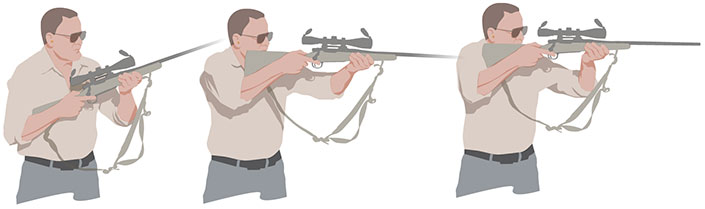
The snap-shot is an important skill to have in your shooting toolbox, because you may have to make a quick shot on a target, animal or a bad guy, in a hurry. You may be shooting in a competition, be the victim of a home invasion or you might be trying to keep a wounded buffalo from stomping you into a blood puddle. The snapshot is not intended to be employed at distance; typically, it is conducted inside 50 yds. To do it with speed so that you can achieve a quick hit there’s a proper technique.
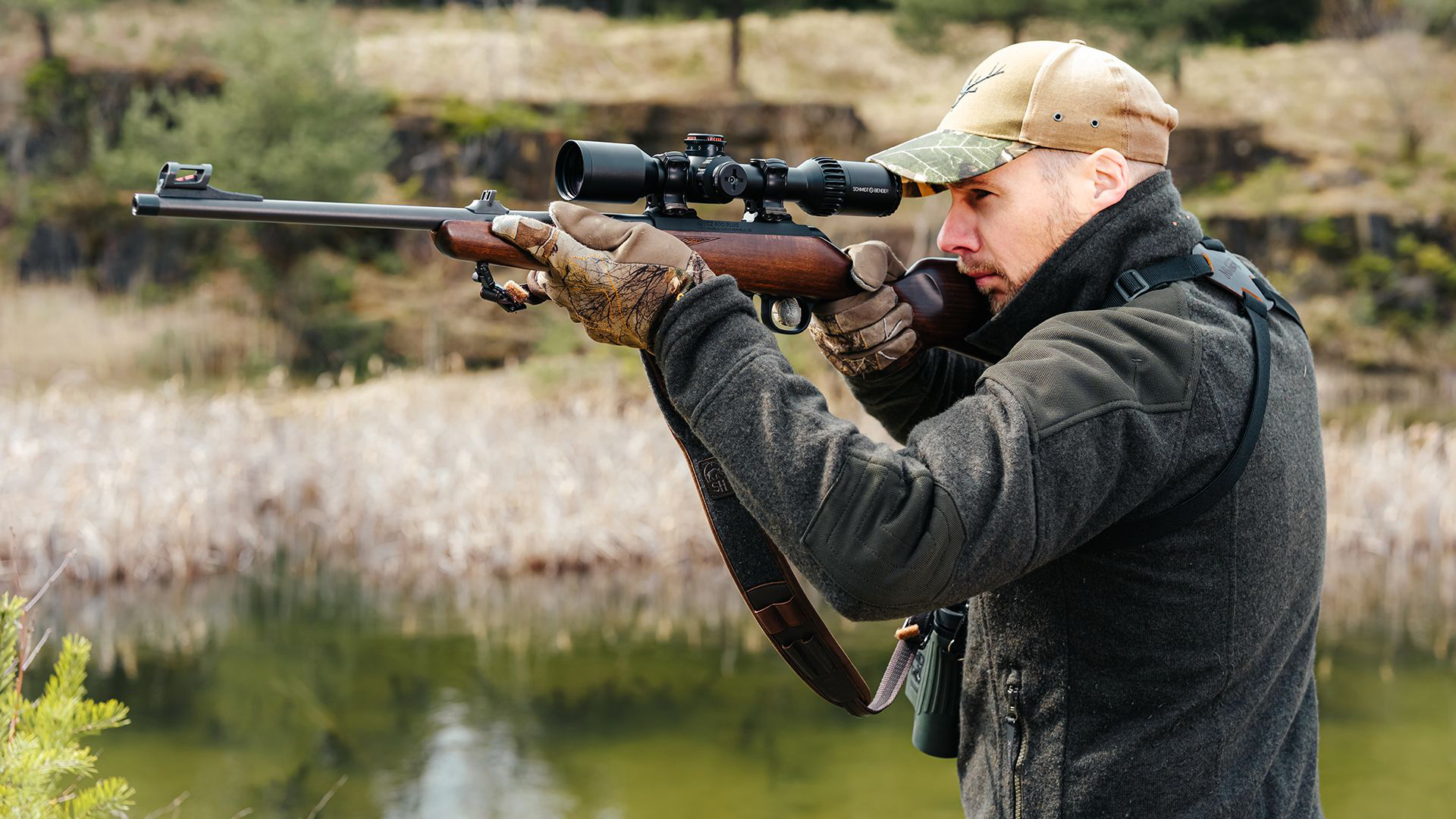
Starting with the rifle at the high ready—similar to port arms—you want to orient the muzzle so it is directly in line between your eyes and the target. While maintaining focus on the target, you want to bring the rifle up perpendicular to your body—with the butt of the rifle about 2" from your shoulder—so that your eye is aligned behind the sight.
Keeping both eyes open, at this point you can begin to shift your focus from the target to the optic’s reticle or the front sight. This should be easy because the sight should be directly between your eye and the target. As you begin to formulate a sight picture, let your finger find the trigger as you pull the rifle straight back into your shoulder. When conducted perfectly, you should be able to shoot at about the same time the butt of the rifle fully seats in your shoulder pocket.
Some shooters mistakenly place the rifle into their shoulder before they raise it up in line between their eyes and the target. This often results in a panicked attempt to locate the target in the sights. Shooters also tend to attempt to use too much magnification on their scope when trying to snap shoot. Ideally, the power setting should be set to something less than 4X. From 2X to 2.5X is about ideal.
And finally, shooters who fail to keep both eyes open throughout the process also struggle to align the sights—optics or open sights—with the target. Keeping both eyes open helps you to better keep the rifle oriented toward the target as you firm up your shooting stance. You can practice the snapshot during dry-practice sessions. When you do, concentrate on moving the rifle, not your head or body.
Most Popular