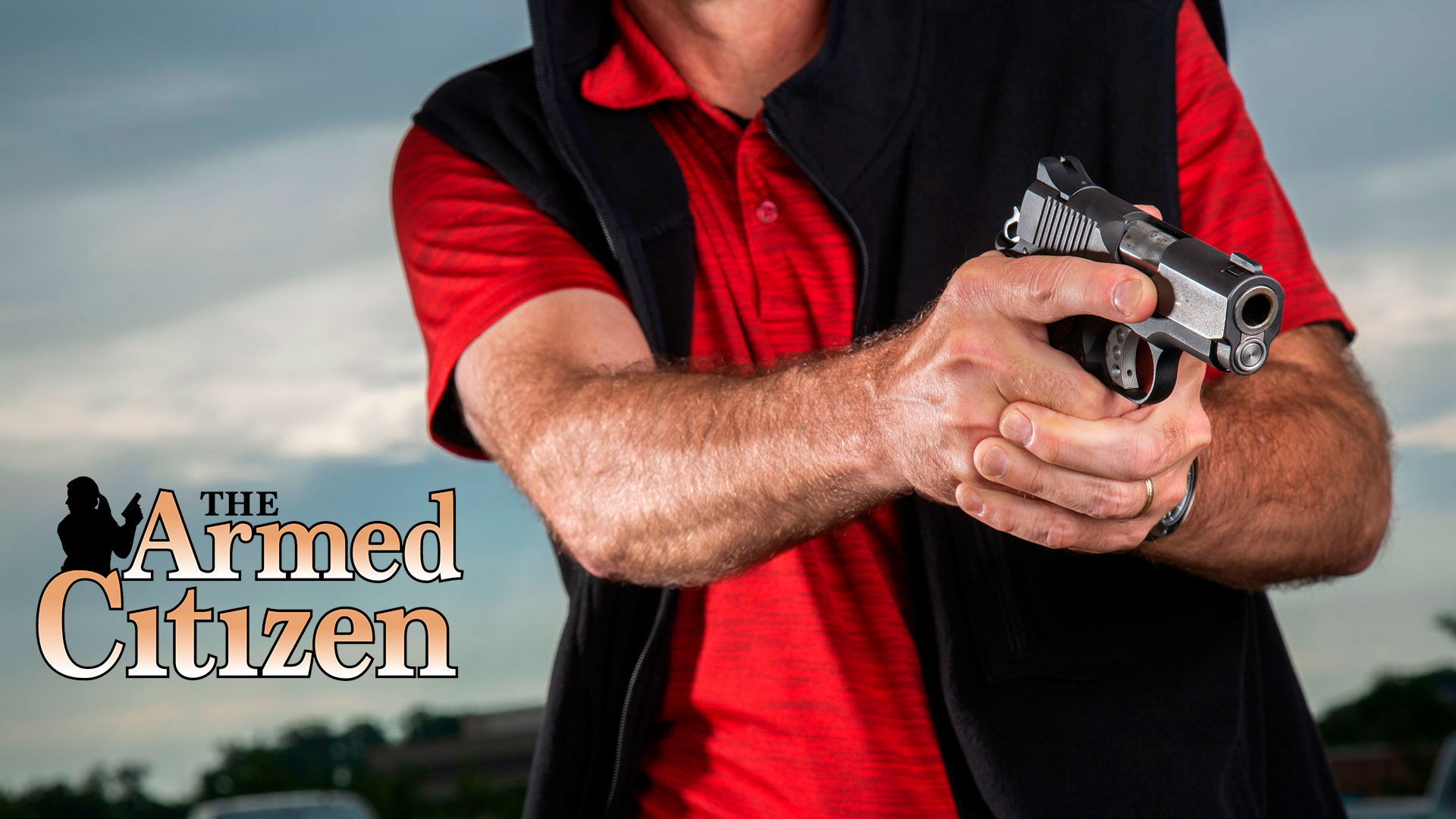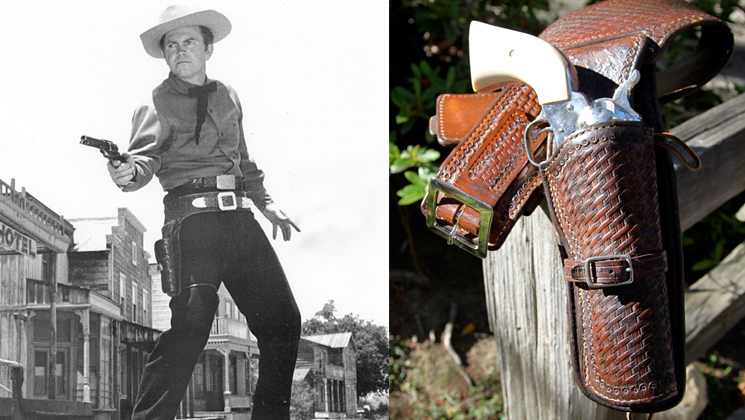
Hollywood gun coach Arvo Ojala’s metal-lined leather holster allowed him (and his disciples) to draw and fire far more rapidly than real-life gunfighters could.
Q: Watching Westerns from the 1950s and ‘60s on cable television, it seems that everyone was a “fast gun.” Were the old-time gunfighters as fast as TV stars depicted them to be? Names come to mind like James Arness, who played Matt Dillon on “Gunsmoke,” and Hugh O’Brian as Wyatt Earp.
A: The simple answer is that many of the TV Western stars from the ‘50s and ‘60s were actually much faster than any of the old-time gunfighters could ever imagine.
The secret to their speed was a double-thickness, metal-lined leather holster designed by the late Hollywood gun coach Arvo Ojala (although famed “Saddlemaker to the Stars” Ed Bohlin also marketed a metal-lined holster, Ojala was the first to patent the concept). The Ojala Model No. 1 exposed the trigger guard and hammer and, due to its metal lining, created a no-friction rig that permitted a Colt Single Action Army to be cocked while still in the holster without binding the cylinder’s rotation as the gun cleared leather. Of course, this was always done with studio blanks, never with live ammunition.
Ojala’s technique, which he taught to countless motion picture and television actors, was to slap the hammer of the holstered gun with the thumb (thereby cocking the action) while drawing the gun by grasping the grip with the bottom three fingers of the gun hand, keeping the trigger finger alongside the frame and away from the trigger until it was pointed at the target and ready to fire. While other fast-draw artists such as Andy Anderson, Rodd Redwing and Dee Woolem had their own fast-draw techniques and rigs, Ojala was the most prominent, as his holsters were used by practically every gunfighter of the “reel” West.
However, in the real West, most shootists carried their sixguns in belts, pants pockets or in holsters that were comparatively tight fitting to keep their sidearms from slipping out. While some pistoleros greased the insides of their holsters to facilitate a faster draw, clearing leather in anything less than two seconds was considered extremely fast. By comparison, using his metal-lined holster and technique, Ojala could draw and fire a Colt SAA in one-sixth of a second.
Interestingly, although he was taught by Ojala, you never see Arness draw his SAA in the “Gunsmoke” opening sequence. The camera simply cuts to Arness firing his hogleg at the famous “man in black,” who actually was Ojala during the first eight years of the show (after that, the producers realized they didn’t have to pay Ojala residuals if he wasn’t shown on screen). And while Hugh O’ Brian was one of Ojala’s best pupils, the real Wyatt Earp is credited with the idea that the secret to winning a gunfight was to take enough time to aim, but to do so quickly—a practice that still holds true today.
Most Popular