** When you buy products through the links on our site, we may earn a commission that supports NRA's mission to protect, preserve and defend the Second Amendment. **
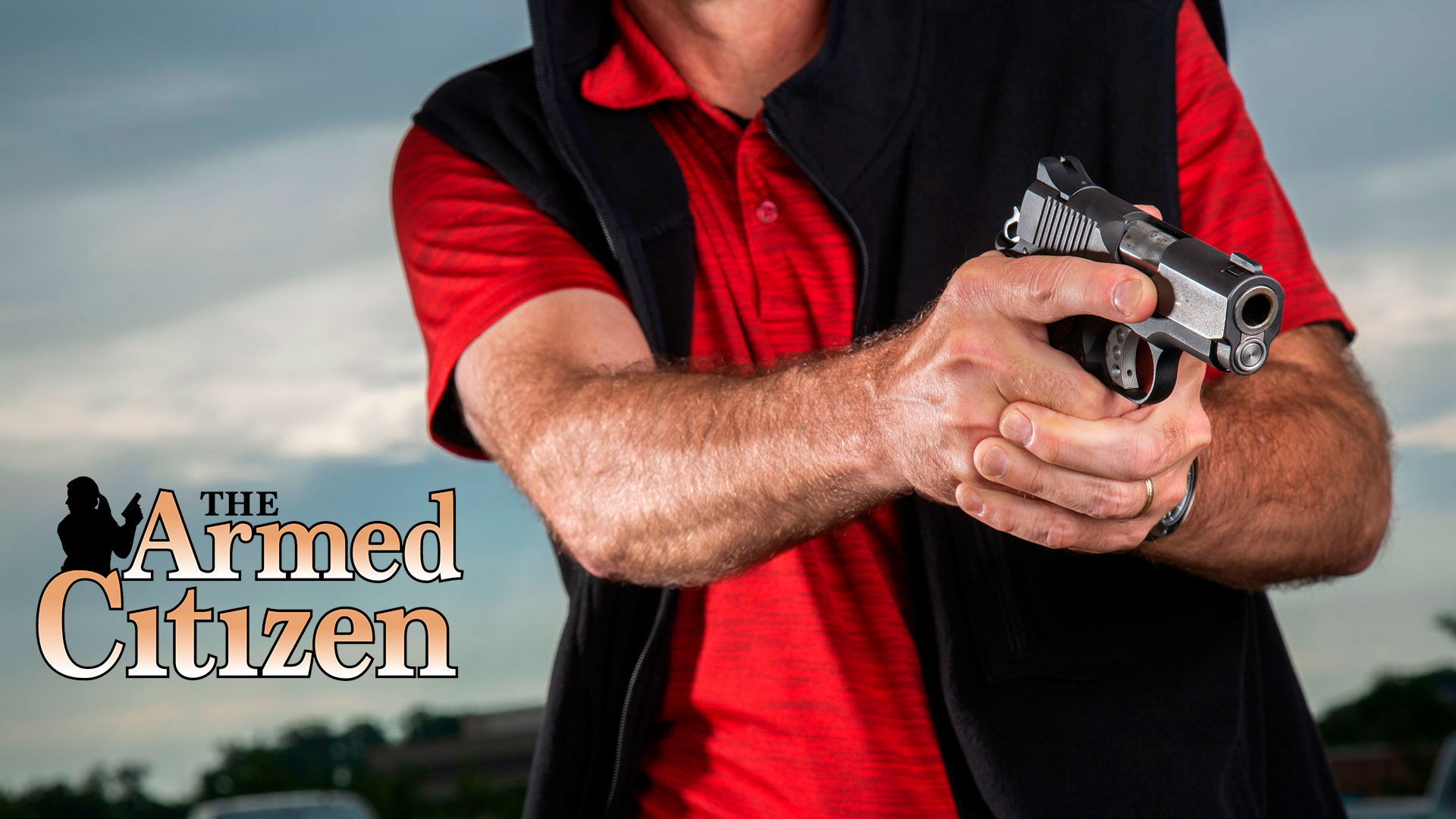
Several years ago, I made a point of emphasizing certain desirable characteristics of several popular lines of service semi-automatic pistols. Most police officers these days go about their dangerous work armed with a modern auto and some sort of backup gun. The auto usually rides the officer's hip in a snatch-resistant security holster that is obviously visible. The backup gun, on the other hand, is out of sight and reserved for dire emergency. Most agencies allow some amount of latitude in the individual officer's right to choose guns, particularly the backup gun. I hold the belief that the backup gun might as well be of the same caliber as the service gun, have the same manual of arms and be capable of working with the same magazines.
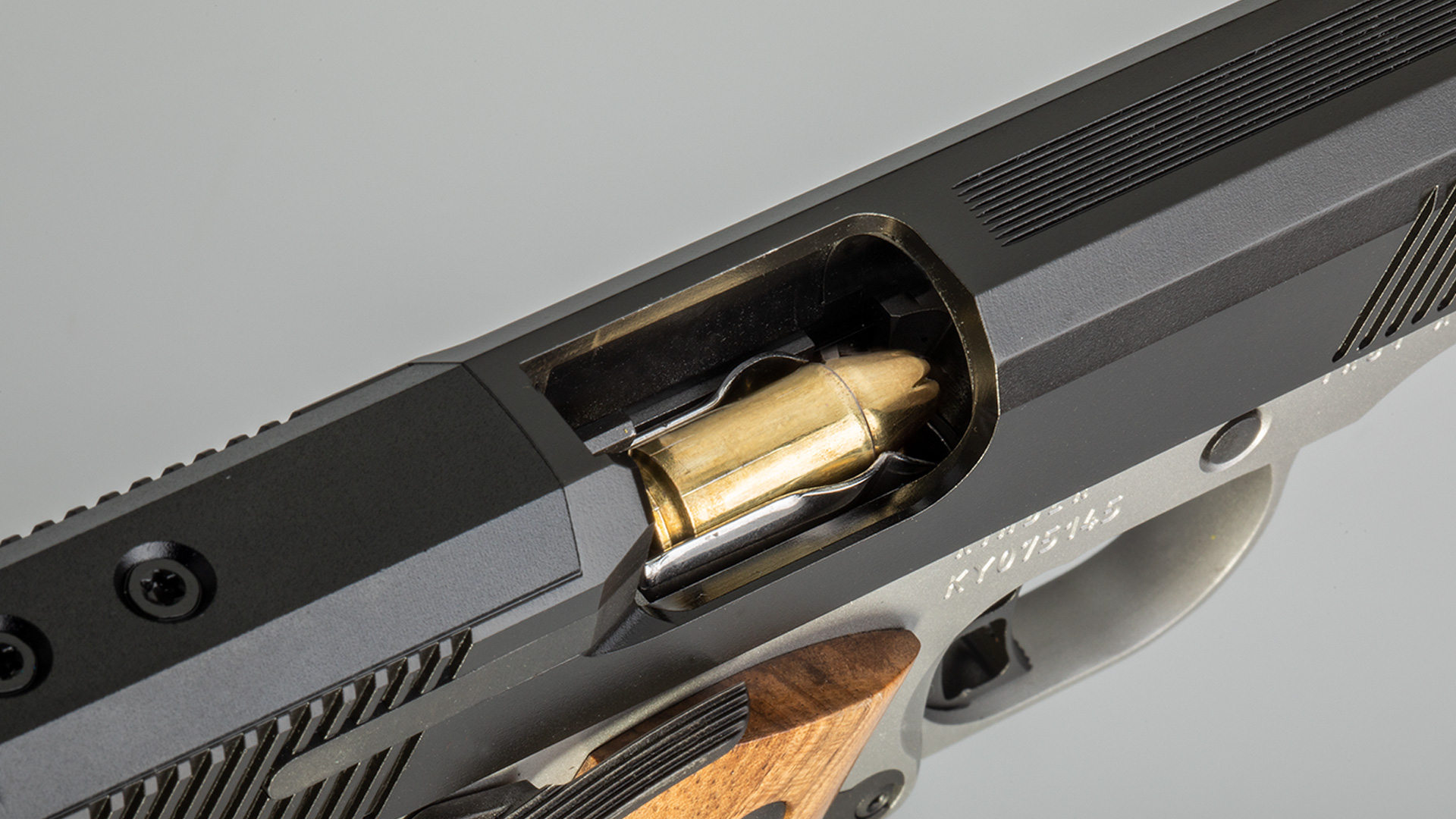
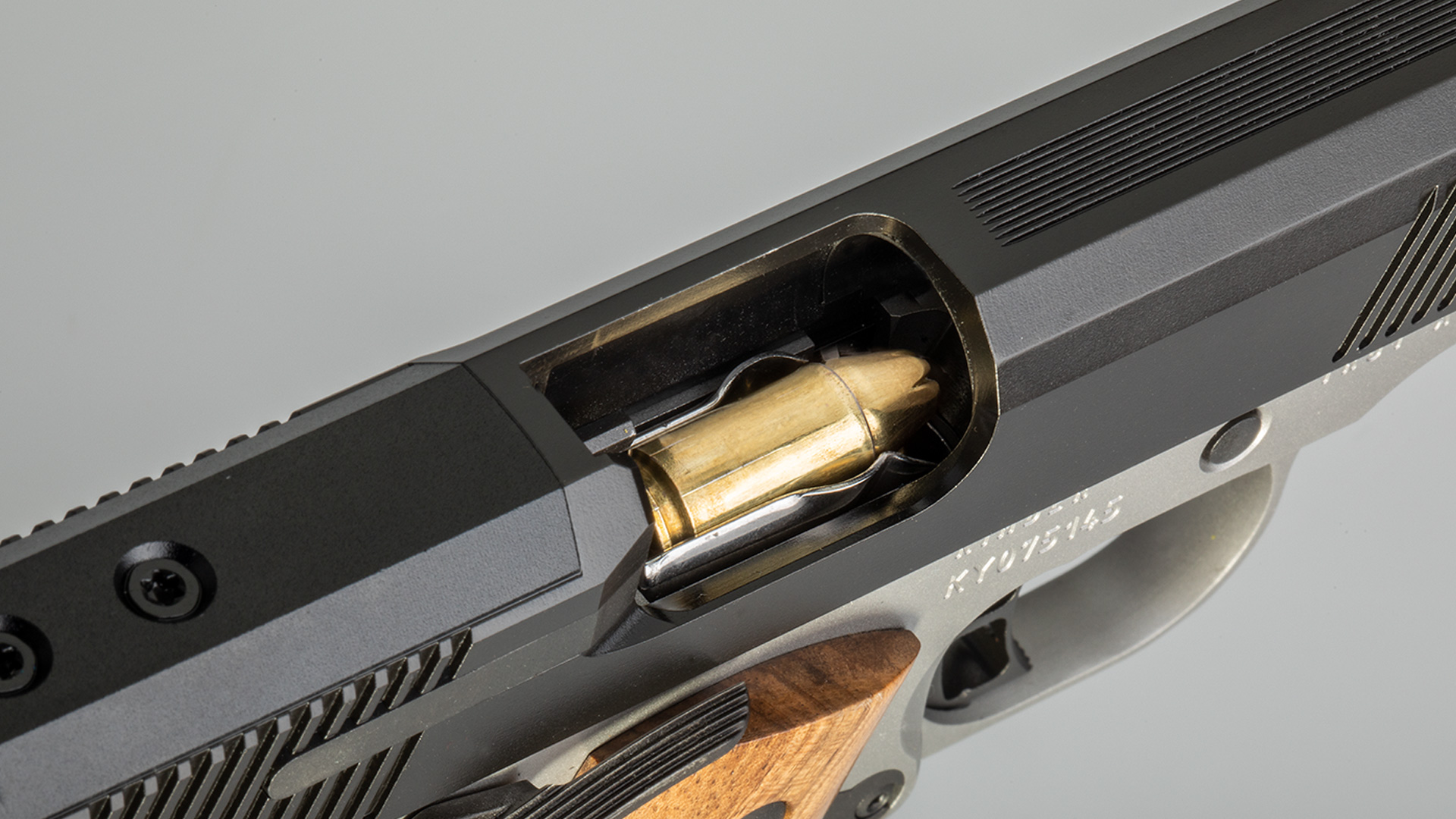
Having the same manual of arms is a training and familiarity issue. If both guns are loaded, fired, reloaded and unloaded with exactly the same hand motions, training time is lessened and you can get in more real shooting. Using the same caliber in both guns is obviously prudent, but how about the same magazines? This is only possible when both the inside and outside pistols are from the same family, where the length of the grip—and therefore magazine—is fitted to standard and compact variations. In other words, there is a full-sized, 9 mm pistol with 15-round magazine, as well as a more compact 9 mm pistol with a 10-round magazine. The 15-round magazines work in both models, but not the other way around. The compact magazine won't reach far enough into the full-sized magazine well to lock in place or feed. With the long magazine in place, the compact pistol is a little awkward, so carry the compact with the short magazine and reload it—if, God forbid, it becomes necessary—with a 15-rounder from your magazine pouches. How many different makes of guns have this kind of variety?
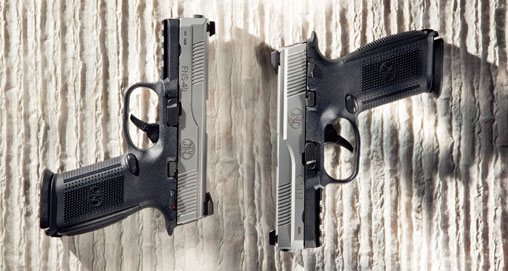
Almost all of them. Back in 2011, I mentioned the Glocks, S&Ws, Colts and Rugers. I missed the Beretta 92 series pistols. With new model Compacts in the FNH line, we now have a duo situation in 9 mm and .40 S&W for that marque. The striker-fired, DAO trigger FNS is now available in two sizes. And legendary maker SIG Sauer offers the new 320 pistol (with the trigger that has caused such a stir) with interchangeable grip modules and slide lengths that permit a lot of variety. They even have three different magazine lengths. And it's fair to say that the makers that don't have at least two different sizes of the same gun are in the minority.
Having the same manual of arms is a training and familiarity issue. If both guns are loaded, fired, reloaded and unloaded with exactly the same hand motions, training time is lessened and you can get in more real shooting. Using the same caliber in both guns is obviously prudent, but how about the same magazines? This is only possible when both the inside and outside pistols are from the same family, where the length of the grip—and therefore magazine—is fitted to standard and compact variations. In other words, there is a full-sized, 9 mm pistol with 15-round magazine, as well as a more compact 9 mm pistol with a 10-round magazine. The 15-round magazines work in both models, but not the other way around. The compact magazine won't reach far enough into the full-sized magazine well to lock in place or feed. With the long magazine in place, the compact pistol is a little awkward, so carry the compact with the short magazine and reload it—if, God forbid, it becomes necessary—with a 15-rounder from your magazine pouches. How many different makes of guns have this kind of variety?
Almost all of them. Back in 2011, I mentioned the Glocks, S&Ws, Colts and Rugers. I missed the Beretta 92 series pistols. With new model Compacts in the FNH line, we now have a duo situation in 9 mm and .40 S&W for that marque. The striker-fired, DAO trigger FNS is now available in two sizes. And legendary maker SIG Sauer offers the new 320 pistol (with the trigger that has caused such a stir) with interchangeable grip modules and slide lengths that permit a lot of variety. They even have three different magazine lengths. And it's fair to say that the makers that don't have at least two different sizes of the same gun are in the minority.
Most Popular