Scope Selection
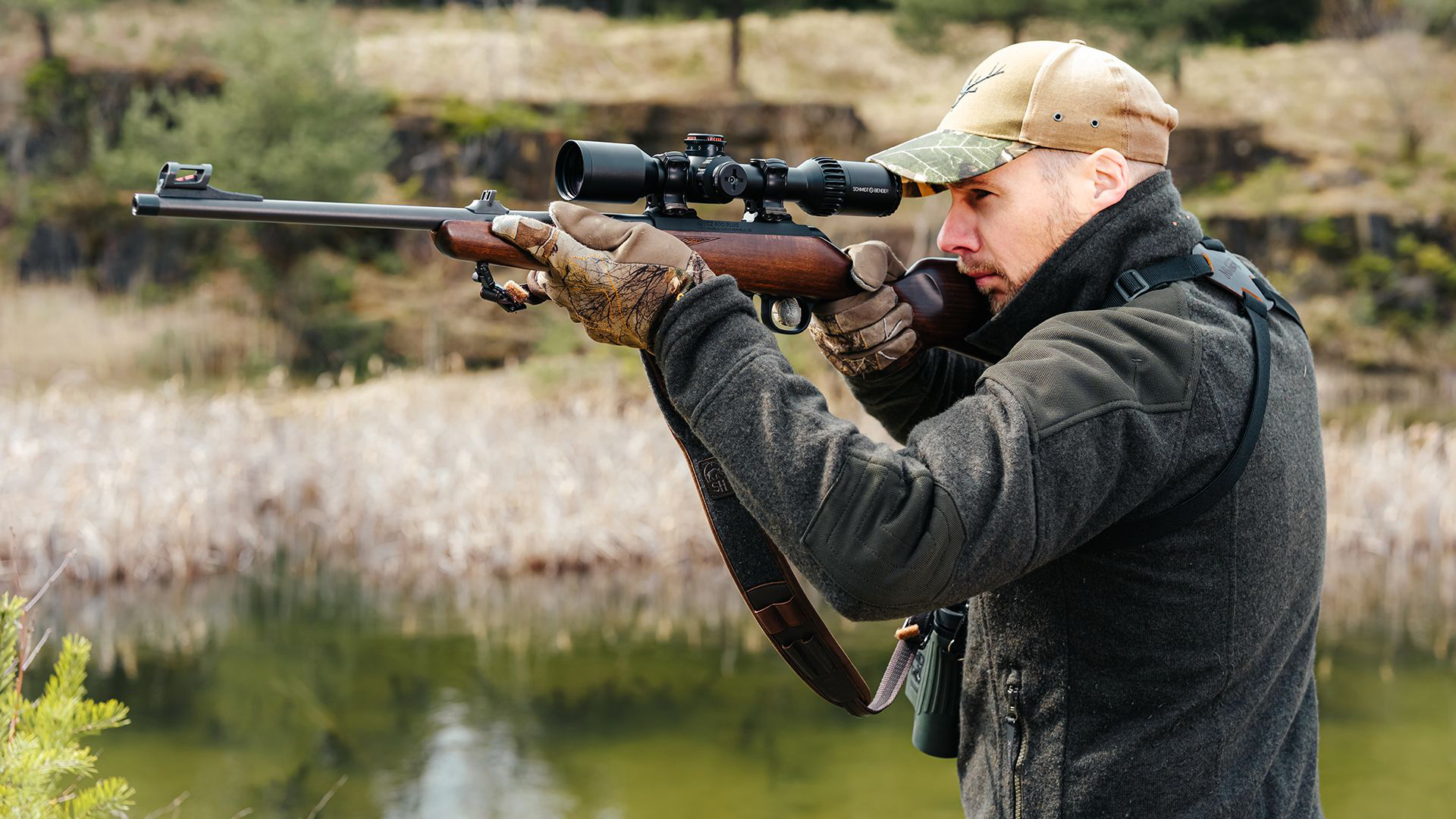
Asked whether any particular scope stood out in his experience, he didn’t hesitate. “My favorite scope of all time, even in preference to the German scopes, is the Leupold.,” said Selby. “I’ve seen every other kind of scope go out of whack, but I don’t think I’ve ever seen a Leupold go.” High praise, indeed, especially from a man who doesn’t give endorsements.
Ammunition Availability
Once Kynoch stopped producing sporting ammunition, Harry found it increasingly difficult to find ammunition for his .416. Reloading was the obvious solution, although components, too, could be scarce. Barnes, and later Hornady, bullets could usually be found, but until BELL started making .416 Rigby cases in the late 1970s, Harry had to make his own by turning the belts off .378 or .460 Weatherby cases on a miniature lathe.
Solids
Much of Selby’s preference for solids, however, was simply the need for penetration above all else on dangerous game. He remembered one particularly fine lion near Ikoma in northern Tanzania. The client had hit the animal, “and this lion took off like a bullet for the bush. I whacked him with the .416 and, boom, he just goes down. I’d never seen such instantaneous death. When we came up to have a good look at him, we found the bullet had entered at the root of his tail, traveled up through the length of the spine, and exited on the front of his head. That’s deep penetration and a most unusual bullet path.”
Hunting
Did Harry have a favorite animal to hunt? “I like hunting,” explained Selby. “I like hunting even a rabbit. Each particular animal has its own charm. With elephant it’s the anticipation, following mile after mile after mile, getting really close, and then you have to do it all again the next day. And then when you do see a really fine one, the thrill, magnificent.
“I really love buffalo hunting. You get right in amongst them, very fast going, running after them. And then leopard hunting is waiting. You have to try and outwit the leopard and he’s trying to outwit you.
“And lion. Tracking a lion in thick bush is probably the most exciting thing you could possibly do. Everything else is blotted out from your mind and your nerves are taut as a violin string. If the bush is really thick you’re walking in the footsteps of the guy in front of you, you’ve gone maybe five or six paces in 20 minutes, and everyone is peering underneath the bush. Sometimes you can smell him, or you hear him cough, and you know you’re right next to him. And there may be five or six lions in there, so when you shoot there’s an explosion of lion. That’s a pretty thrilling feeling when you get into a situation like that. But you can’t really compare them. They’re different kinds of thrills. They’re all good.”
Most Popular