This article was originally published in American Rifleman, May 1983
It is pretty generally agreed that the most difficult handgun to shoot is the .45 Model 1911. The soldiery from two wars, the U.S. Expeditionary Force of 1917-18 and the buckos who were in the last brouhaha of 1941-45, are in hearty agreement.
When the second of those wars was wound up, there was a clamor for a smaller and lighter pistol. The argument was that our allies were armed with the 9 mm and their handguns were smaller and lighter. The Infantry board exhaustively tested several 9 mm models.
After three years of on-and-off field testing it was decided to just keep the Model 1911 as is. Some conservative soul in the Pentagon said we’d just play along with the old .45 “in view of the numbers on hand and the expense of the change.”
The Model 1911 is the oldest firearm in the military arsenal. All the contemporary rifles, machine guns, mortars and artillery have had their day and been declared obsolete. The facts are, however, that the pistol is tops with civilians—shown by a surge to combat shooting practice, beginning on the West Coast with Jeff Cooper who now teaches combat marksmanship at an isolated little town in northern Arizona.
Long before Jeff Cooper developed combat shooting practice, marksmen were striving to improve the accuracy of the M1911 pistol. The design was whumped up by John Browning as a military arm, and basic to its future was the ability to function reliably. As a result, it was put together with virtually no close tolerances.
The as-issue M1911 had a set of sights consisting of a half-moon front and a very low U-shaped notch rear. The latter was movable by tapping with a light hammer. It was obvious after World War I that these sights could stand improvement, and those on the M1911A1 were better. There were howls of protest from the conservative element. “Too flimsy. Won’t never stand hard field usage,” they said. That was decades ago, and it seems to be holding up pretty well.
There has long been agitation for a .45 auto with the double-action feature. Jeff Cooper is opposed to the double action on the .45 M1911. Instead, he advocates, and the courses of fire that he has instituted commence with, the pistol being cocked and locked. It is drawn from the holster and the safety is shifted as the draw is in progress.
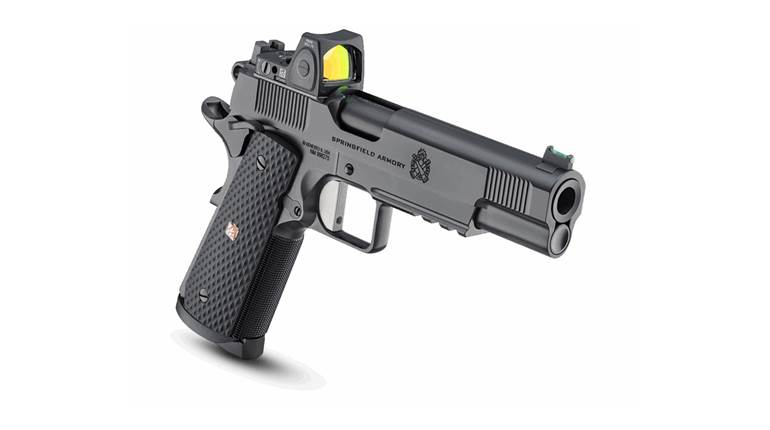
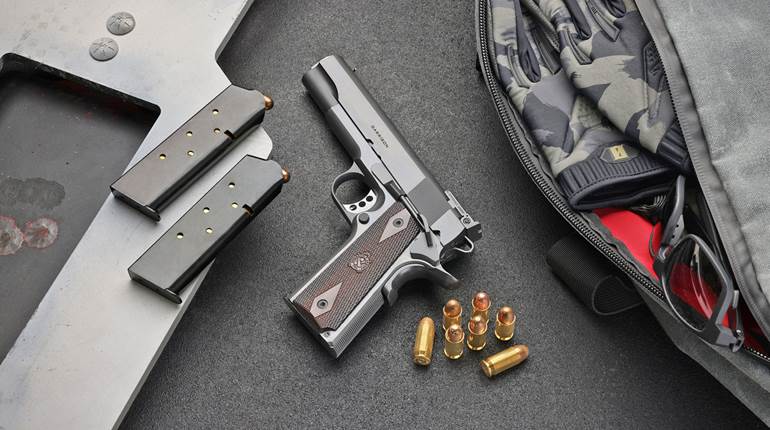
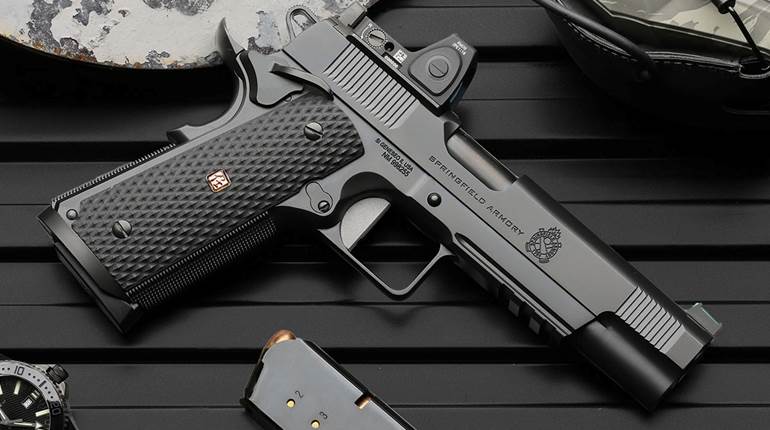
Never in the long history of handguns has there been a single model so butchered, tinkered with, redesigned, added to, reshaped and refurbished as the Model 1911. It is indicative of a liking for, an affection if you will, for the sturdy old workhorse. I’d reckon it will see the 21st century with flying colors
Most Popular