Marksmanship matters. In August 1914, two small armies proved the value of "rifle practice" in the fields of France and Flanders. One of those armies is highlighted in Anthony Vanderlinden's article "Belgium's Model 1889 Mauser: The Rifle That Saved Paris" that will be featured in the February 2015 issue of American Rifleman. While the article is about the Mauser adopted by Belgium in 1889 (giving birth to FN) there is an important lesson to be found from Tireurs d'Elite (sharpshooters) forged in competitions held in Belgium before the war-a prudent course for a small, neutral nation bordered by France on one side and Imperial Germany on the other. As Vanderlinden points out, the Germans were held up by Belgian rifle fire (and fortifications) critically delaying the German advance to take Paris and knock France out of the war. And it was "plucky little Belgium" that delayed the Kaiser's troops long enough for the British to get into the fight.
The National Rifle Association of America was formed in 1871 to "promote marksmanship" and "rifle shooting on a scientific basis." The British NRA actually predates the American one by about a dozen years. How important was rifle marksmanship in Victorian England? Queen Victoria herself fired the "opening shot" at England's Bisley Range in 1860.
Although the British NRA was serious about rifle shooting, the British army was dramatically outshot during the Anglo-Boer War of 1899-1902. W.W. Greener in The Gun And Its Development, attributes Lord Salisbury with advocating for "a rifle in every cottage." But the British learned from the experience, adopting the Short, Magazine, Lee-Enfield rifle, as well as improved training. The result was, by 1914, a trained British rifleman who could fire the "Mad Minute," meaning 15 aimed shots into a 12" target at 300 yds. in 60 seconds. How effective was this on the battlefield? During the brutal fighting around Mons on August 23, 1914, British riflemen scored hits at more than 1,000 yds., leading the Germans to believe they were facing machine guns due to the volume and accuracy of fire, not mere riflemen.
Sadly, by a century ago this month, many, if not most, of those riflemen were killed or wounded in the slaughterhouse that would characterize the fighting on the Western Front. And the need for men in belligerent armies outstripped the need to train them to shoot, really shoot.
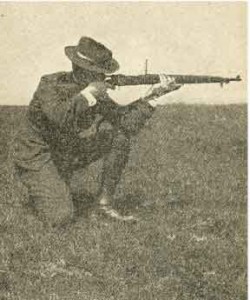
In 1917-18, it was the Americans who brought precision rifle fire back to the battlefield. It was NRA President Col. Newton Baker and the commander of the American Expeditionary Force, Gen. John J. "Blackjack" Pershing (a competitive shooter himself), who made sure Americans could shoot before they went to France. "The rifle is a distinctly American weapon," once wrote Pershing. Ever heard of Sgt. Alvin York or Lt. Sam Woodfill or even the Marines at Belleau Wood? They killed German machine gunners with long-range, precision rifle fire. American riflemen used their rifles to save Paris again in 1918 and help break the stalemate of trench warfare.
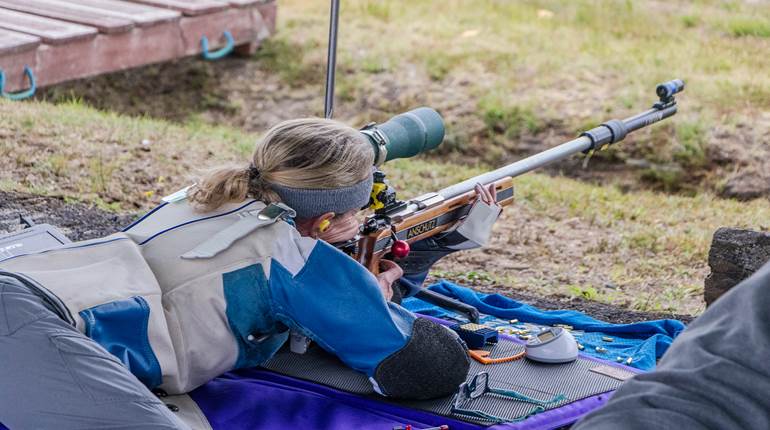
Today, NRA continues that mission of promoting marksmanship. In the words of the late Marine Corps Maj. Gen. Merritt "Red Mike" Edson, Medal of Honor recipient (look up Edson's Ridge) and former NRA President and Executive Director: "The ability to shoot straight is that part of national security which affects the individual more than any other."
Most Popular